 how-to
Access to Encouragement for Life Coaching
Table of Contents
- Why Access to Encouragement Matters in Life Coaching
- How Coaching Supports Goal Achievement Through Accountability
- Overcoming Social Anxiety in Self-Help Group Settings
- Free Community Support for Personal Development
- Maintaining Momentum in Life Coaching Between Sessions
- Building a Safe Space for Self-Reflection and Growth
- Measuring Progress and Real Change in Your Coaching Journey
- Conclusion
- Frequently Asked Questions
Last Updated: October 3, 2026
Why Access to Encouragement Matters in Life Coaching
Access to encouragement for life coaching can be the difference between staying stuck and moving forward. When you're working toward meaningful goals, having consistent emotional support transforms your journey from isolated struggle to collaborative growth. (Source: research on the power of social commitment)
Life coaching thrives on accountability and connection. A coach creates space for you to discover your own answers while believing in your potential. The real power emerges when you build a support system that surrounds you with encouragement between sessions.
Many people underestimate how much access to encouragement shapes their success. Without regular affirmation and gentle accountability, momentum dies. People who maintain access to encouragement through community see measurable progress; those who isolate themselves often abandon their goals within weeks.
The challenge most people face is finding consistent, affordable access to encouragement that fits their life, available when you need it most, whether at 6 AM before work or during a difficult evening.
How Coaching Supports Goal Achievement Through Accountability
Goal achievement requires accountability, the gentle pressure that keeps you moving when motivation fades. Access to encouragement multiplies that effect.
When you share your goals with someone who believes in you, something shifts internally. Research shows people who publicly commit to goals complete them at significantly higher rates than those who keep goals private.
Accountability works best when it's supportive, not punitive. A good coach asks tough questions without judgment, celebrates small wins, and frames setbacks as data, not failures.
The practical steps look like this:
- Weekly check-ins where you report progress and obstacles
- Clear metrics so you know what success looks like
- Reflection sessions where you examine what's working
- Honest feedback delivered with compassion
- Adjusted strategies when your first approach isn't landing
Accountability means someone believing you'll succeed and asking you to track the evidence. That belief is contagious.
Overcoming Social Anxiety in Self-Help Group Settings
One of the biggest barriers to accessing encouragement is social anxiety, fear of judgment, rejection, or being "too broken" compared to others.
This anxiety is real and valid. Most people in self-help groups feel the same way before they show up.
Start small: listen first, attend a few sessions, get comfortable with the space. Notice that sharing struggles doesn't destroy you; it often relieves you.
The group setting becomes therapeutic. When you hear someone else describe a problem you thought was uniquely yours, isolation dissolves. You realize you're human, and humans need community.
If traditional group settings still feel overwhelming, hybrid options exist:
- Online communities where you can participate from home
- Smaller group sizes with 4-6 people instead of 20
- Written sharing instead of speaking aloud
- Lurking permission where you consume content without contributing
The goal isn't to force yourself into discomfort. It's to find the format of access to encouragement that works for your nervous system.
Free Community Support for Personal Development
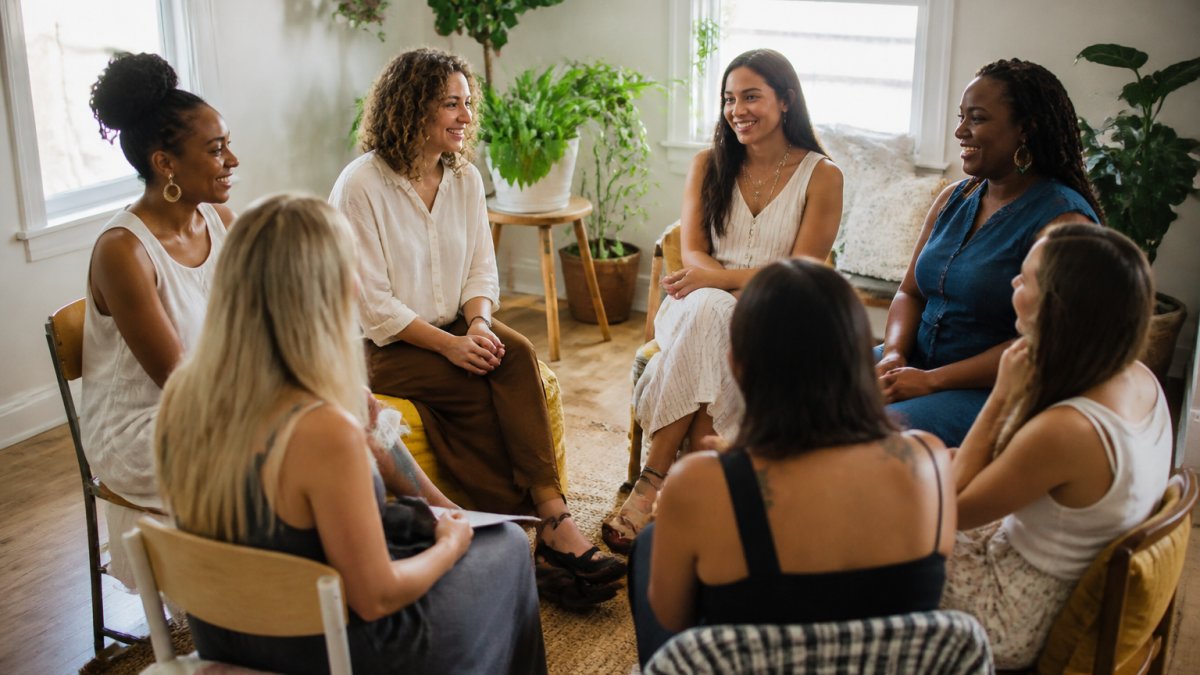
Cost shouldn't be a barrier to encouragement. Free community support can be equally transformative when it's structured well, and dozens of legitimate platforms exist specifically for this purpose.
Free communities work because members show up to genuinely help each other, no transaction, just humans supporting humans.
Where to find free encouragement communities:
- Reddit communities like r/DecidingToBeBetter, r/GetMotivated, and r/Accountability have active daily participation with moderated discussions. These are free, anonymous, and available 24/7.
- Facebook Groups focused on specific goals (fitness, career transitions, sobriety, entrepreneurship) often have thousands of members sharing wins and setbacks daily.
- Meetup.com lists free in-person and hybrid accountability groups in most metropolitan areas, from goal-setting circles to personal development meetups.
- Faith-based organizations like churches, temples, and mosques often host free support groups and mentorship programs regardless of membership.
- Public libraries frequently host free workshops, book clubs, and peer support circles on personal development topics.
- University extension programs offer free or low-cost community classes and support groups open to the public.
- Nonprofit organizations focused on mental health, recovery, or specific life challenges (like The Trevor Project, NAMI, or local food banks) often run free peer support groups.
What makes a free community effective:
- Clear guidelines that protect psychological safety
- Active moderation that redirects toxic behavior within hours
- Diverse members at different stages of their journey
- Structured activities like weekly goal-setting prompts or themed discussions
- Accessible formats (text, video, audio, synchronous and asynchronous)
- Transparent rules about confidentiality and violations
How to evaluate a free community before joining:
Before committing time, spend a week observing:
- Read recent posts. Are conversations respectful and do members celebrate each other's wins?
- Check moderator presence. Are harmful comments and trolls removed quickly?
- Look for your stage. Can you find people at your starting point?
- Assess response time. When someone asks a question, how long until they get a thoughtful reply?
- Notice tone. Does the community feel warm and curious, or judgmental?
The trade-off with free communities is usually response time and depth of personalization. Moderators are volunteers. A coach can tailor feedback to your specific situation; a community offers general wisdom and peer perspective.
Many people dismiss free communities as "less serious" than paid coaching. The difference isn't quality of encouragement, it's accountability structure. A coach follows up if you miss a session; a community relies on your self-directed participation. If you're self-motivated, free communities deliver the same emotional support at zero cost. (Source: statistics on social anxiety)
Maintaining Momentum in Life Coaching Between Sessions
Coaching sessions create powerful moments of clarity. Then real life hits, work demands your attention, old habits pull at you, and the clarity fades.
Maintaining momentum between sessions is where most people struggle. You need access to encouragement that bridges the gap from one appointment to the next.
Create a simple system: daily check-in (5 minutes), weekly reflection (15 minutes), community touchpoint (3-4 times per week), and an accountability partner.
Frequency matters more than intensity. Daily goal visibility and weekly community connection prevent isolation and compound into real change.
Believe in Yourself Framed poster →
Simple tools matter: a framed poster, a mug with an affirmation, positivity-focused products. These are environmental design, making your goals impossible to ignore.
Building a Safe Space for Self-Reflection and Growth
Real transformation requires self-reflection in a safe space: non-judgment, confidentiality, acceptance, respected boundaries, and consistency.
Creating this safety is the coach's primary job: listening without fixing, asking curious questions, and reflecting back what they hear.
When you feel safe, vulnerability becomes possible. Vulnerability is where growth and change happen.
The physical or digital environment matters: calm space, easy-to-navigate platforms, consistent meeting times signal that your experience matters.
Measuring Progress and Real Change in Your Coaching Journey
Real change is usually quiet, and measurable, if you know what to track.
Establish a baseline before you start:
Be specific: "I've initiated zero difficult conversations with my manager in the past three months" is measurable; "I feel stuck" is not.
Track the encouragement effect specifically:
Measure behavioral change monthly:
Every 30 days, count: difficult conversations initiated, projects completed, relationship initiations, percentage of time on goal-aligned activities, and avoided behaviors.
These are concrete. They're not about feeling better; they're about doing differently.
Track emotional shifts with a simple journal:
Once per week, spend 5 minutes answering:
- What's one thing I believed about myself this week that I didn't believe last month?
- What's one risk I took that I wouldn't have taken before coaching?
- When did I feel most believed in this week? What was happening?
- What's one old pattern I caught myself in and chose differently?
Read back over these monthly. Patterns emerge. You'll see shifts in self-perception that numbers alone don't capture.
The ROI of encouragement:
If you're paying for coaching, calculate the return:
- Time investment: How many hours per month do you spend in coaching or community? (E.g., 4 hours)
- Behavioral shifts: How many new actions are you taking per month as a result? (E.g., 8 difficult conversations, 2 completed projects, 12 relationship initiations)
- Cost per action: Divide coaching cost by actions taken. If you're paying $200/month and taking 20 new actions, that's $10 per behavior shift.
- Life impact: Which of those actions moved you closer to your goal? How much closer? (E.g., "3 of those conversations led to a promotion conversation; that's worth tracking")
Free communities have a different ROI: your time investment is higher (you're doing the work yourself), but the cost is zero.
When to know it's working:
You don't need to feel transformed. You need to see evidence:
- You're taking actions you weren't taking before
- When you face obstacles, you problem-solve instead of quit
- People around you comment on changes they notice
- Your baseline metrics are moving in the direction you chose
- You feel less alone, even on hard days
- You're thinking about yourself differently (less "I can't," more "I haven't yet")
If none of these are true after 12 weeks, coaching or community isn't the barrier.
Conclusion
Access to encouragement for life coaching isn't a luxury, it's the infrastructure that holds your goals in place while you build toward them. Whether through a professional coach, a supportive community, or both, the consistency of encouragement determines whether you stay committed or drift back to old patterns.
Soul Perfect exists because we believe this access should be available to everyone. Our free community connects you with people who understand your journey. Our affirmation apparel and wellness products keep your commitment visible. Our marketplace of positivity-focused vendors gives you tools for intentional living. Start with what feels right, but start. Your future self is waiting for you to believe in the possibility of change.
Frequently Asked Questions
What makes finding the right encouragement source different from just reading self-help content online?
Real encouragement in life coaching comes from consistent human connection, accountability, and personalized feedback, not passive content consumption. When you access encouragement through a community or coach, you get reflection on your specific obstacles, someone who remembers your goals, and emotional support during setbacks. A coach or supportive group asks questions that spark self-insight, whereas articles and videos are one-way. The collaborative process creates behavioral change that solitary reading rarely produces.
How can I access free community support for personal development without paying for coaching?
Many platforms offer free community spaces for personal growth. Soul Perfect runs a free community focused on encouragement and intentional living where members share experiences and support each other's goals. Other options include support groups, faith-based communities, and online forums dedicated to specific life transitions. Free resources work best when you're committed to showing up regularly and engaging genuinely, the accountability comes from your consistency and the relationships you build, not from a paid coach.
What should I look for in a community to know it's genuinely supportive and not toxic?
Look for communities with clear values around respect and non-judgment, active moderation that removes harmful behavior, and members who share real stories rather than just inspirational quotes. A genuine supportive environment creates a safe space where vulnerability is met with empathy, not criticism. Pay attention to how the community handles disagreement and whether people feel comfortable admitting struggles. Trust your gut, if interactions feel performative or judgmental, that community won't support your growth.
How do I maintain momentum in life coaching if I can't afford ongoing sessions?
Maintaining momentum doesn't require expensive coaching. Use accountability partners from your free community, set specific success metrics you track weekly, and create actionable plans with clear next steps. Regular check-ins with even one trusted person, a friend, family member, or community member, provides the accountability that keeps you moving forward. Many people find that combining free community support with self-directed goal-setting and periodic coaching sessions (rather than weekly) sustains progress while managing cost.