 comparison
Affirmations for Women Over 40 vs. Younger Adults
Table of Contents
- Why Affirmations for Women Over 40 Need a Different Approach
- The Biological and Hormonal Shifts That Change Your Affirmation Needs
- Positive Self-Talk Scripts for Women at Different Life Stages
- How to Practice Daily Affirmations Effectively Across Age Groups
- Mental Health Benefits of Positive Affirmations for Midlife Women
- Direct Comparison: Affirmations That Work for Women Over 40 vs. Younger Adults
- Building Your Affirmation Practice: Where to Start
- Frequently Asked Questions
Last Updated: October 1, 2026
Why Affirmations for Women Over 40 Need a Different Approach
Affirmations for women over 40 address different psychological needs than those for younger women. What resonates with a 25-year-old building her career often falls flat for a woman navigating midlife transitions, hormonal changes, and a fundamentally different relationship with herself.

Younger women focus on external validation: landing jobs, attracting partners, building confidence in new situations. Women over 40 have proven themselves in these domains; their affirmation work centers on reclaiming authenticity after decades of people-pleasing and managing internal shifts that come with aging.
A 30-year-old affirming "I am capable and worthy" builds confidence from scratch. A 45-year-old needs something more specific: permission to stop shrinking herself, recognition of hard-won wisdom, or reassurance that her value doesn't depend on appearance or productivity.
The Biological and Hormonal Shifts That Change Your Affirmation Needs
Hormonal fluctuations in your 40s affect mood regulation, sleep, energy, and emotional resilience. Many women experience a sudden loss of confidence or motivation due to neurochemical shifts, not personal change.
Affirmations work through neuroplasticity, the brain's ability to form new neural pathways through repetition. When hormonal changes affect your baseline mood and stress response, generic affirmations miss the mark because you're working with real biochemical changes.
Younger women work within a stable hormonal baseline. Women over 40 work against fatigue, mood fluctuations, and physical changes that demand acknowledgment; affirmations that ignore these realities feel hollow.
The most effective approach combines affirmations with self-compassion for what your body is experiencing. Affirmations for women over 40 work better when they honor the transition: "I trust my body's wisdom" instead of "I have endless energy."
Positive Self-Talk Scripts for Women at Different Life Stages
The language that resonates with a 28-year-old building her first home doesn't work for a 48-year-old redefining her identity after major life transitions. Understanding why the language shifts helps you construct affirmations that actually land.
The Psychology Behind the Language Shift
Younger adults (25-35) navigate identity exploration, trying on different roles and building competence in new domains. Their self-doubt centers on capability: "Can I do this?" Their affirmations address the gap between current and desired competence.
Women over 40 have proven themselves in multiple domains. Their self-doubt is rarely about capability; it's about whether they should, whether they're allowed to prioritize themselves, or whether their value depends on productivity or appearance. Their affirmations address permission, reclamation, and integration of experience.
A younger woman saying "I am capable of learning this new skill" addresses a real gap. A 45-year-old saying the same thing feels hollow because she already knows she's capable; she needs permission to try without being perfect.
Affirmations for Younger Adults: Building Confidence in New Domains
Younger affirmations are forward-focused (becoming, achieving), externally-referenced (being seen, heard, validated), capability-centered (competence in new roles), and action-oriented.
Examples for younger women: "I am capable and worthy of this opportunity," "My voice matters and people listen to me," "I am building a life I love," "I deserve success and I'm willing to work for it."
The emotional tone is energetic and forward-moving, addressing the psychological task of early adulthood: establishing yourself and building competence.
Affirmations for Women Over 40: Reclamation, Permission, and Integration
Believe in Yourself Women's Relaxed T-Shirt →
Affirmations for women over 40 are present-focused (being, accepting), internally-referenced (internal permission, self-knowledge), wisdom-centered (drawing on experience), and permission-granting.
Examples for women over 40: "I trust the woman I've become and the choices I've made," "I choose myself without needing anyone's approval," "I am enough exactly as I am right now," "My body is wise, even as it changes."
How to Construct Your Own Affirmations: A Framework
| Younger Woman's Affirmation | Woman Over 40's Affirmation | Why the Difference |
|---|---|---|
| "I am strong and capable" | "I am allowed to be soft and still be strong" | Younger: building strength; Over 40: integrating strength with other parts of self |
| "I will achieve my goals" | "I am redefining what my goals actually are" | Younger: external goal-setting; Over 40: internal alignment |
| "People respect me" | "I respect myself, and that's what matters" | Younger: external validation; Over 40: internal validation |
| "I can do anything I set my mind to" | "I choose what's worth my energy" | Younger: capability; Over 40: discernment |
| "I am building my dream life" | "I am living the life that's actually mine" | Younger: future-focused; Over 40: present-focused |
How to Practice Daily Affirmations Effectively Across Age Groups
Affirmations that stick come down to implementation science. Most guides say "say your affirmations daily" without explaining how to structure practice so it becomes automatic rather than another abandoned task.
Understanding Neuroplasticity and Affirmation Practice
Habit Stacking: The Most Effective Implementation Strategy
Embodied Practice: Why Speaking Aloud and Physical Anchors Matter
Measuring Progress: What Actually Changes When Affirmations Work
The Affirmation-Action Loop: Why Affirmations Alone Aren't Enough
Mental Health Benefits of Positive Affirmations for Midlife Women
Affirmations for midlife women address specific challenges: identity loss after major transitions, anxiety about aging, and grief over roads not taken. They work through cognitive reframing and emotional regulation. Women over 40 report that affirmations help most when they directly address their transition. Repeated positive self-talk rewires how your brain processes stress and threat. Affirmations are most effective when paired with therapy, community, adequate sleep, and movement.
Direct Comparison: Affirmations That Work for Women Over 40 vs. Younger Adults
The clearest way to understand the difference is to see them side by side.
| Life Stage | Focus | Sample Affirmation | Psychological Target | Best Delivery |
|---|---|---|---|---|
| Younger Adults (25-35) | Building confidence, claiming space | "I am capable and worthy of this opportunity" | Overcoming self-doubt in new roles | Morning routine, goal-setting |
| Women Over 40 | Reclaiming authenticity, honoring wisdom | "I trust the woman I've become and the choices I've made" | Processing transitions, releasing perfectionism | Evening reflection, journaling |
| Younger Adults (25-35) | External validation | "My voice matters and people listen to me" | Being heard, establishing credibility | Before important conversations |
| Women Over 40 | Internal permission | "I choose myself without needing anyone's approval" | Breaking people-pleasing patterns | Daily practice, embodied (wearing affirmation apparel) |
| Younger Adults (25-35) | Future-focused | "I am building a life I love" | Motivation, direction-setting | Vision board, planning sessions |
| Women Over 40 | Present-focused | "I am enough exactly as I am right now" | Accepting current reality, reducing perfectionism | Bedtime, stress-management moments |
Building Your Affirmation Practice: Where to Start
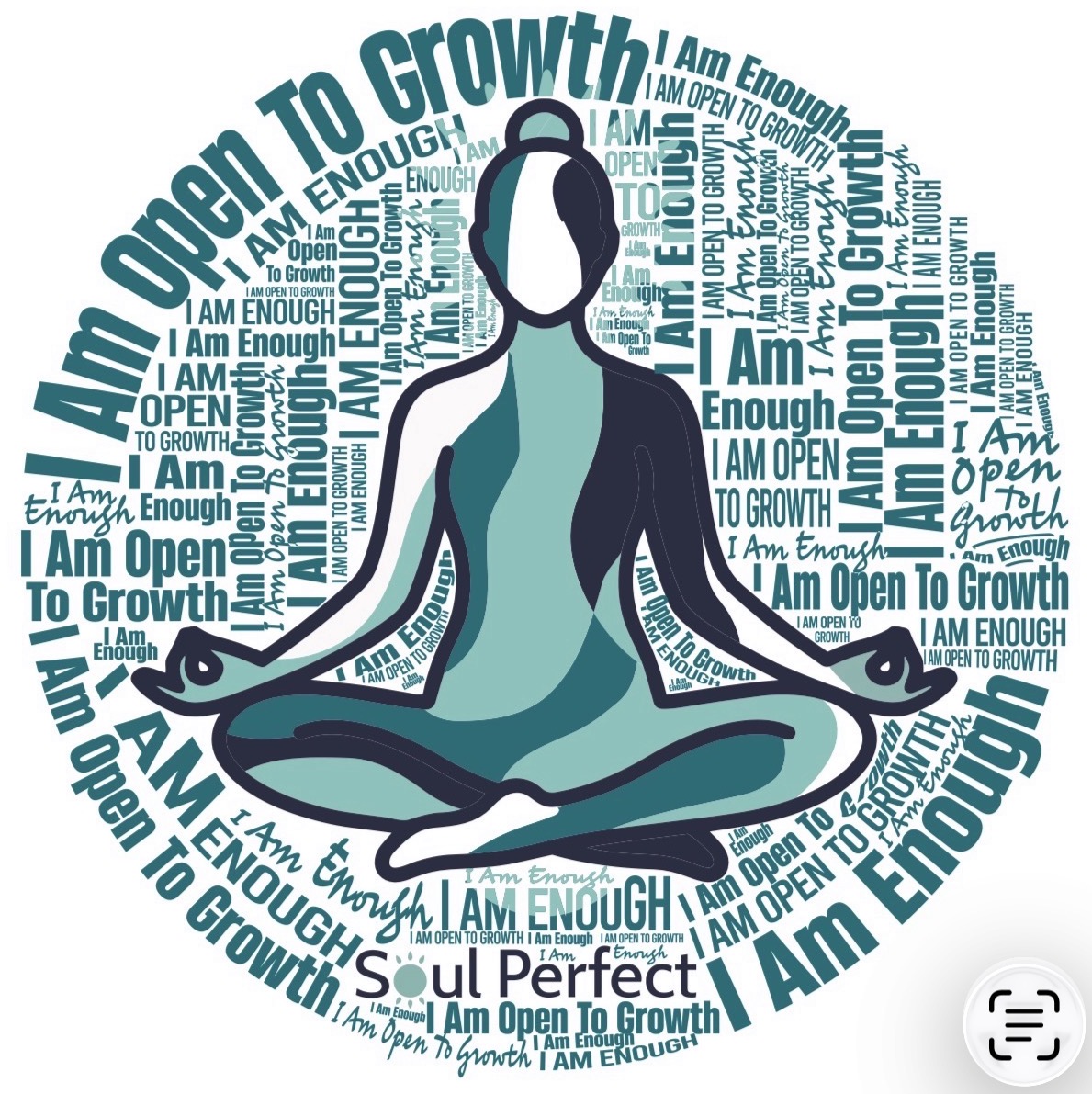
Start by identifying what you actually need right now. Write down 3-5 affirmations that make you feel something when you say them aloud. Build the practice into an existing routine: say them while showering, write them in a journal with your morning coffee, or wear affirmation apparel like Soul Perfect's I Am Open to Growth/I Am Enough 3/4 sleeve raglan shirt at $28.99. Pair affirmations with action.
Frequently Asked Questions
How do affirmation needs change as women age?
As women move into their 40s and beyond, affirmation needs shift from external validation and achievement to internal resilience and self-worth. Younger women often use affirmations to build confidence in new areas or overcome self-doubt about appearance or career. Women over 40 typically benefit more from affirmations that address limiting beliefs about aging, celebrate accumulated wisdom, and reinforce authenticity. This shift reflects real changes in priorities and psychological development, what matters most changes as life circumstances and hormonal contexts evolve.
What are the best daily affirmations for women over 40?
Effective affirmations for women over 40 focus on self-compassion, resilience, and inner strength. Examples include: 'I am worthy exactly as I am,' 'My experience is my superpower,' 'I choose authenticity over approval,' and 'I am building the life I truly want.' The best affirmations address specific concerns like aging gracefully, navigating life transitions, or overcoming past limiting beliefs. Pairing affirmations with daily self-care practices, like morning reflection or evening gratitude, makes them stick better than isolated repetition.
Can positive self-talk improve mental health in midlife?
Yes. Positive self-talk and affirmations support mental health by reducing stress, building emotional regulation, and increasing self-esteem during midlife transitions. Research on neuroplasticity shows that consistent positive self-talk can reshape thought patterns over time. For women navigating hormonal shifts, relationship changes, or career transitions, affirmations provide a practical tool to maintain well-being and resilience. Combining affirmations with other wellness practices, community support, self-care routines, and professional guidance when needed, creates the strongest foundation for psychological health.
How do I create a personalized affirmation practice?
Start by identifying what matters most to you right now: confidence, aging gracefully, resilience, or self-worth. Write affirmations in first person ('I am' rather than 'You are') and make them specific to your actual values, not what you think you should believe. Practice them daily, morning and bedtime routines work best. Pair affirmations with tangible reminders like wearing affirmation apparel such as the 'I Am Enough' raglan shirt or displaying an 'I Am Open to Growth' framed poster in your space. Consistency matters more than perfection; even 2-3 minutes daily builds momentum over weeks.