 listicle
Best Tools for Tracking Personal Growth in 2026
Table of Contents
- Best Tools for Tracking Personal Growth: Quick Comparison
- How We Evaluated These Personal Growth Tools
- Top Habit Tracking Apps for Behavioral Change
- Personal Development Journals for Reflection & Intentional Living
- Personal Growth Apps Beyond Habit Tracking
- Personal Growth Frameworks: Structured Systems for Transformation
- Free vs. Paid: ROI & Privacy Considerations
- Tool Stacking: Building Your Integrated Personal Growth System
Best Tools for Tracking Personal Growth in 2026
Last Updated: July 29, 2026
Research shows that individuals who actively track personal development see measurable improvements in goal completion and behavioral change. At Soul Perfect, we understand that personal growth isn't one-size-fits-all. The tools you choose matter far less than having a system that fits your life and keeps you accountable.
Best Tools for Tracking Personal Growth: Quick Comparison
What separates tools that move the needle from those gathering dust on your phone? It comes down to three factors: whether the tool matches your specific growth area, whether the interface works intuitively, and whether it creates genuine accountability rather than just logging data.
| Tool | Best For | Starting Price | Free Tier | Standout Feature |
|---|---|---|---|---|
| Soul Perfect | Community-driven intentional living | Contact for pricing | No | Shared personal stories + marketplace |
| Fabulous | Science-backed habit formation | $16.99/month | Yes, limited | Behavioral psychology-based routines |
| Habitica | Gamified accountability | $4.99/month | Yes, 3 trackers | RPG-style progression system |
| Strides | Goal tracking + habit metrics | $4.99/month | Yes, 3 trackers | Four tracker types for flexibility |
| Headspace | Mindfulness & daily wellness | $12.99/month | Yes, limited | Non-intimidating beginner approach |
| Calm | Meditation & sleep content | $16.99/month | Yes, limited | Celebrity-narrated sleep stories |
| Todoist | Task management for goals | $5/month | Yes, 5 projects | Natural language task parsing |
| Day One Journal | Rich media journaling | Contact for pricing | Yes, limited | Automatic metadata (location, weather) |
| Coach.me | Habit tracking + coaching | $25/week coaching | Yes, habit tracker | Optional professional accountability |
| GoalsOnTrack | SMART goals + AI tracking | Contact for pricing | No | Comprehensive goal-to-habit system |
How We Evaluated These Personal Growth Tools
The best tools reduce friction between intention and action, provide feedback loops that reinforce behavioral change, and adapt to how you actually live. We evaluated each tool across five dimensions: Does it address a specific growth area? How much friction exists between wanting to log something and actually logging it? What's the quality of the feedback mechanism? Does it create genuine accountability? What's the privacy posture?
Top Habit Tracking Apps for Behavioral Change
Habit formation is one of the most researched areas of personal development. Small, consistent behaviors compound into significant transformation over months and years.
Fabulous: Science-Backed Routine Building
Fabulous uses behavioral psychology research to guide users through habit formation that feels like coaching rather than tracking. The app structures habits into multi-day journeys organized by theme: better sleep, improved focus, exercise routines, or stress management.
What makes Fabulous different is routine stacking, attaching new behaviors to existing routines rather than building isolated habits. This approach, anchoring new behaviors to existing anchors, is one of the most reliable ways to make habits stick. The interface includes daily check-ins with mood tracking, gratitude prompts, and mind-body assessments. Premium access unlocks audio coaching sessions and live group coaching.
Pros: Scientifically validated methodology, aesthetically calming interface, personalized daily routines
Cons: Limited free version, some users find animations distracting
Best for individuals seeking a guided, behavioral science approach to habit building.
Habitica: Gamified Accountability & Community
Habitica transforms habit tracking into an RPG where real-world tasks become quests and habits earn experience points that level up your digital avatar. The system categorizes activities into three types: habits (behaviors you want to build or break), dailies (recurring tasks), and to-dos (one-time projects).
The community aspect is Habitica's secret weapon. You can join parties with friends or guilds with strangers pursuing similar goals, creating genuine social accountability. That reciprocal accountability is far more powerful than self-directed tracking.
Pros: Makes tracking genuinely fun, strong community support, highly customizable
Cons: Gamification can feel overwhelming, interface complexity may intimidate new users
Best for people motivated by competition, progression, and community.
Strides: Goal Tracking Meets Habit Formation
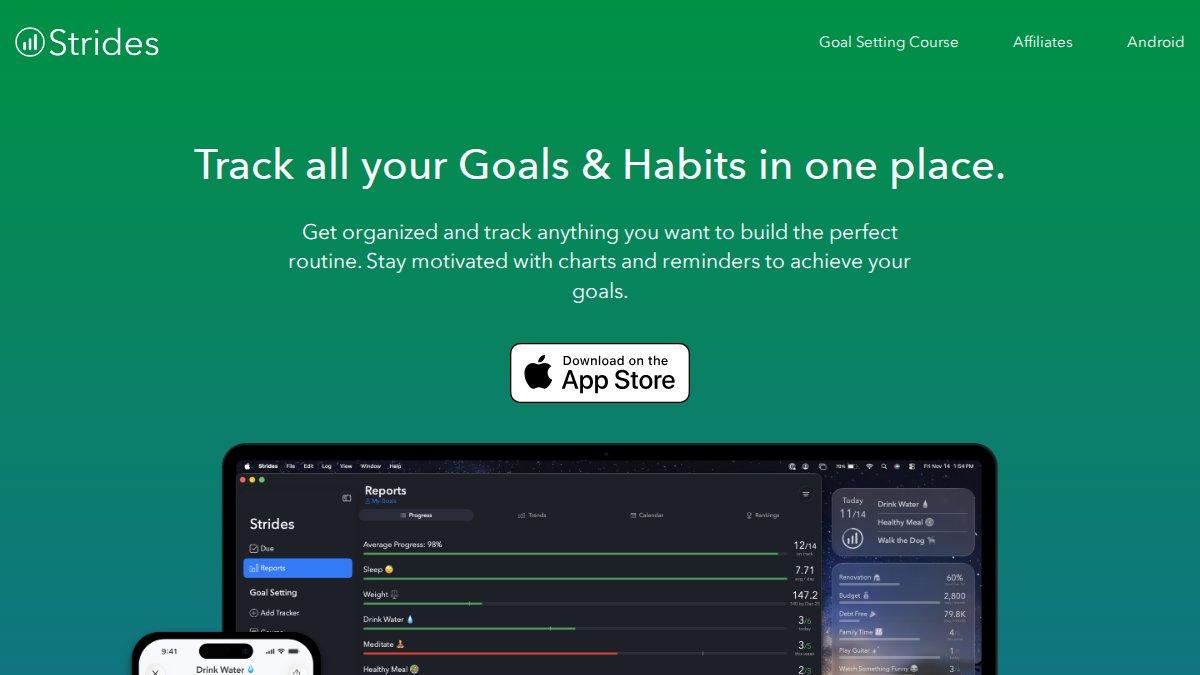
Strides bridges habit tracking and goal progress with four tracker types: habits (yes/no daily behaviors), targets (numeric goals like "read 30 minutes daily"), averages (tracking metrics like weekly exercise frequency), and milestones (breaking larger goals into checkpoints).
Visual dashboards show clear progress across all four tracker types. Strides syncs across Apple devices seamlessly and includes detailed analytics showing streaks, patterns, and historical progress. The free tier limits you to three active trackers. The $4.99/month subscription unlocks unlimited trackers.
Pros: Four tracker types offer flexibility, excellent analytics and progress visualization, seamless cross-device sync
Cons: Free plan capped at three trackers, iOS/Apple-only, lacks built-in reward systems or community features
Best for Apple users who want to combine habit tracking with measurable goal progress.
Personal Development Journals for Reflection & Intentional Living
Tracking alone isn't enough for genuine personal growth. Reflection, examining your experiences, patterns, and beliefs, is where insights emerge and behavioral change becomes integrated into your identity.
Day One Journal: Rich Media Journaling with Context
Day One treats journaling as a complete experience. The app automatically captures context: location, weather conditions, music playing, and motion activity data. These details become part of your entry without manual effort.
The writing experience is thoughtful, with rich text editing and markdown support. You can embed photos, videos, audio recordings, and drawings directly into entries. Daily prompts and customizable templates help when you're unsure what to write. Over months and years, your journal becomes a detailed record of your transformation.
The free tier includes basic journaling with limited syncing. Premium ($99.99/year or $9.99/month) unlocks unlimited syncing across devices, advanced search, and the ability to share entries.
Pros: Beautiful writing interface, automatic metadata capture, strong privacy with end-to-end encryption, powerful search and tagging
Cons: Premium features require subscription for full functionality
Best for individuals building a long-term personal growth record who value rich media and detailed context alongside written reflection.
Personal Growth Apps Beyond Habit Tracking
The most comprehensive personal growth systems combine habit tracking with mindfulness, task management, and professional support.
Mindfulness & Meditation Tools: Headspace & Calm
Mindfulness practice directly supports personal growth by building self-awareness, reducing reactive behavior, and creating space between impulse and action. Headspace positions itself as beginner-friendly with hundreds of guided meditations organized by topic: stress, anxiety, focus, sleep, relationships, and personal growth. Pricing starts at $12.99/month with a free tier including limited content.
Calm takes a broader wellness approach with meditation, sleep stories (many narrated by celebrities), focus music, and movement sessions. Pricing runs $16.99/month, though annual plans offer better value.
Both tools work best as part of a broader personal growth system rather than standalone solutions. They create the mental clarity that makes other personal growth work more effective.
Todoist: Task Management for Goal-Driven Progress
Goals without action plans remain abstract. Todoist breaks goals into actionable tasks and tracks completion. Natural language parsing means you can type "Finish project report by Friday" and Todoist automatically extracts the task, due date, and priority.
For personal growth, Todoist shines when working toward specific outcomes: completing an online course, building a portfolio, preparing for a certification exam. The free tier includes basic task management with five personal projects. The Pro plan ($5/month) unlocks unlimited projects and advanced filters.
Coach.me: Habit Tracking Plus Professional Accountability
Coach.me offers a hybrid model: a free habit tracker combined with optional paid coaching services. The habit tracker is straightforward, log daily habits, see streaks, get community support. What differentiates Coach.me is coaching integration. You can hire a coach through the platform for $25/week and up, providing accountability, personalized advice, and structured support for your growth goals.
Best for individuals who've tried solo tracking and recognize they need professional accountability to follow through on growth commitments.
Personal Growth Frameworks: Structured Systems for Transformation
Some people thrive with simple habit trackers. Others need more structure: clear goal-setting methodology, milestone tracking, and integration between goals and daily habits.
GoalsOnTrack: SMART Goals & AI-Powered Progress
GoalsOnTrack takes a comprehensive approach to goal setting and tracking. The platform guides you through SMART goal methodology (Specific, Measurable, Achievable, Relevant, Time-bound), then breaks goals into milestones and action steps. The built-in journal tool lets you record progress, reflect on obstacles, and capture lessons learned. Habit tracking integrates directly with goals, so you can see how daily behaviors support larger objectives.
Best for high achievers managing multiple personal and professional goals who need structured methodology and detailed progress tracking.
Soul Perfect: Community-Driven Intentional Living
Soul Perfect takes a fundamentally different approach by centering community and shared experience. Rather than isolated tracking, Soul Perfect connects you with others on similar journeys, creating accountability through genuine relationships and shared vulnerability.
The platform provides access to encouragement, curated resources for intentional living, and connection through a marketplace where members share personal stories and growth experiences. This community-focused model addresses something many solo tracking apps miss: the human need for belonging and mutual support during transformation.
Best for individuals who recognize that accountability and growth happen in relationship, and who want their personal development journey connected to a supportive community.
Free vs. Paid: ROI & Privacy Considerations
Free tiers serve a valuable purpose: they let you test whether an app fits your workflow before committing financially. However, free tiers have real limitations. The question isn't whether to pay, but what you're paying for. A $5/month habit tracker that genuinely changes your behavior delivers far more ROI than a free app you abandon after two weeks.
Before committing to a paid plan, use the free tier for 2-4 weeks. Does the interface feel natural? Are you actually using it daily? Does it address your specific growth area?
Privacy & Data Security in Personal Growth Tools
Personal growth data is sensitive. Your habit tracking, journaling, and goal progress reveal patterns about your vulnerabilities, struggles, and aspirations. Examine each tool's privacy policy before committing. Does the company sell data to advertisers? Are your entries encrypted in transit and at rest?
Day One explicitly emphasizes privacy with end-to-end encryption, your entries are encrypted on your device and can't be read by Day One's servers. If you're tracking sensitive growth areas, addiction recovery, mental health challenges, relationship issues, prioritize tools with strong privacy protections.
Tool Stacking: Building Your Integrated Personal Growth System
The best personal growth systems aren't single apps, they're integrated stacks where different tools handle different dimensions of transformation. A typical stack might look like this: Habitica for daily habit tracking with community accountability, Headspace for mindfulness practice, Todoist for goal-related projects, and Day One for reflection and pattern recognition.
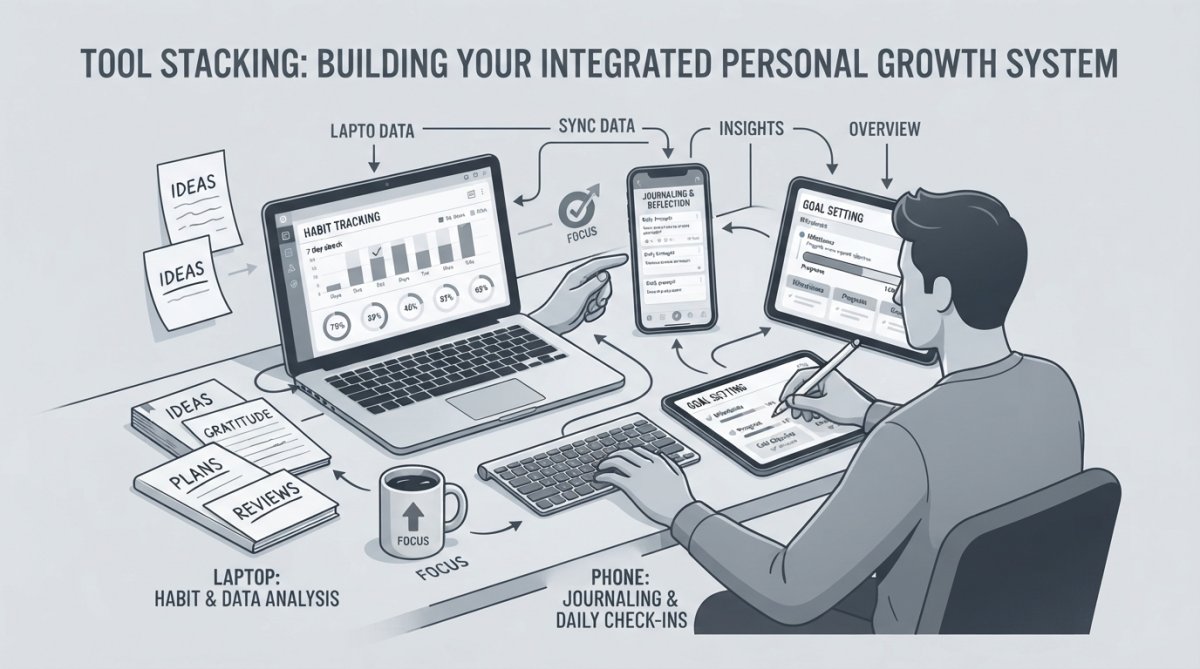
When stacking tools, follow these principles:
Start with one app, add gradually. Don't download five tools simultaneously. Start with a habit tracker. After two weeks, add a meditation app. After another month, add journaling. This prevents overwhelm and lets you understand what each tool actually contributes.
Assign clear purposes. Your habit tracker isn't for goals. Your task manager isn't for daily reflection. Each tool has a specific job.
Build a daily ritual. Tool stacking works when you have a consistent routine for using each tool. Five minutes in the morning with Habitica, ten minutes in the evening with Day One.
Review quarterly. Every three months, assess whether each tool still serves your growth. If you're not using it, remove it.
Personal growth is neither quick nor automatic. The tools you choose shape whether your intentions become reality or remain perpetual aspirations. The best tools for tracking personal growth aren't the fanciest or most expensive, they're the ones that fit how you actually live and create accountability that sticks.
Soul Perfect recognizes that this journey works best in community. Rather than relying solely on apps and algorithms, connecting with others pursuing intentional living creates the accountability and encouragement that sustains transformation. Access resources for intentional living, share your personal story, and find genuine support from people who understand your growth journey. Get started with Soul Perfect and build the meaningful life you're working toward.
Frequently Asked Questions
What are the best tools for tracking personal growth?
The best tools for tracking personal growth depend on your goals and learning style. Habit tracking apps like Fabulous and Habitica excel at behavioral change. For reflection, Day One Journal offers rich journaling with metadata. Mindfulness apps like Headspace and Calm support mental wellness. Goal-focused tools like GoalsOnTrack use SMART frameworks. Community-driven platforms like Soul Perfect combine accountability with intentional living resources. Most offer free tiers to test before committing.
How can I track personal development effectively using habit tracking apps?
Effective habit tracking starts with clarity: define specific behaviors, not vague goals. Use habit tracking apps like Strides to set reminders and visualize progress through charts. Combine daily tracking with weekly reflection to identify patterns. Link habits to larger goals, for example, morning meditation supports focus and mindfulness. Consistency matters more than perfection; most apps reward streaks to build momentum. Review progress monthly and adjust habits based on what's working.
Are free personal growth tools as effective as paid subscriptions?
Free tiers of most personal growth apps, Fabulous, Habitica, Headspace, Todoist, offer solid foundations for habit formation and basic tracking. However, paid versions unlock advanced features: detailed analytics, community coaching, expanded content libraries, and personalization. If you're starting your personal growth journey, free tiers are sufficient to test the tool's fit. Upgrade to paid only if you consistently use the app and need deeper features. Consider your budget and commitment level before investing.
Can I use multiple personal growth tools together, or will they conflict?
Using multiple tools, tool stacking, is highly effective when each serves a distinct purpose. For example: Habitica for daily habit accountability, Day One for journaling and reflection, Headspace for mindfulness, and Todoist for goal-driven tasks. The key is avoiding duplication: don't track the same habit in two apps. Choose tools with solid integrations or manual sync capabilities. Start with 2-3 core tools, then add others as your personal growth system matures. Most tools work independently without technical conflicts.
How do personal development journals support transformation compared to habit tracking alone?
Journaling adds depth that habit tracking alone cannot provide. While habit tracking apps like Habitica measure behavioral consistency, journals like Day One capture reflection, insights, and emotional context. Journaling helps identify triggers, celebrate wins beyond streaks, and process setbacks. Combining both creates a complete personal growth system: habits build discipline and self-management, while journaling builds mindset and intentional living. Research supports journaling for stress reduction and self-awareness, making it a psychological anchor for sustained transformation.
This article was written using GrandRanker