 ultimate-guide
Can Online Support Groups Help Anxiety? A 2026 Guide
Table of Contents
- How Online Support Groups Help Anxiety
- What to Expect in an Online Anxiety Support Session
- Online Group Therapy vs Support Groups: Key Differences
- Anxiety Support Group Etiquette and Community Norms
- Best Platforms for Mental Health Support
- Signs You Need Professional Mental Health Help Beyond a Support Group
- Getting Started: How to Find and Join the Right Group
- Conclusion
Last Updated: August 9, 2026
How Online Support Groups Help Anxiety
Online support groups help anxiety by creating a safe space where people with shared experiences can connect, exchange coping strategies, and feel less alone. The power lies in peer-to-peer support, hearing directly from others who understand what panic, overthinking, and social anxiety actually feel like in daily life.
When managing an anxiety disorder, isolation amplifies symptoms. You convince yourself you're the only one experiencing this specific fear, that your worries are uniquely irrational. Online support groups dismantle that isolation instantly. You log in and realize hundreds of people describe the exact same thought patterns and physical sensations. That shift from "I'm broken" to "I'm experiencing something many people experience" creates psychological safety that isolation cannot replicate.
When a stranger shares a story about managing panic at work and describes techniques that helped them, you absorb that information differently than from a self-help article. You're hearing from someone who actually lived through it. This peer wisdom builds hope and provides concrete, tested coping strategies you can implement immediately.
Soul Perfect, a positivity-driven community platform, recognizes this need by creating spaces where members share personal stories and connect through intentional living. Many people find that combining professional mental health support with peer-to-peer community creates a more complete recovery framework than either approach alone.
Online support groups also reduce the friction of help-seeking behavior. Anxiety makes asking for help feel impossible. Calling a therapist's office, scheduling an appointment, sitting in a waiting room, these steps feel overwhelming when managing anxiety symptoms. An online group requires only opening your browser and participating from home at your pace.
What to Expect in an Online Anxiety Support Session
An online anxiety support session typically lasts 60 to 90 minutes and follows a structured format designed to maximize psychological safety and shared learning. Most sessions open with introductions, where members share their name and what brought them that week.
The facilitator then introduces a topic or opens the floor for discussion. Some groups focus on specific themes: managing social anxiety at work, coping with panic attacks, or stress management techniques. Others use an open format where members bring whatever's on their mind. You'll hear multiple perspectives on the same challenge, which is where real learning happens.
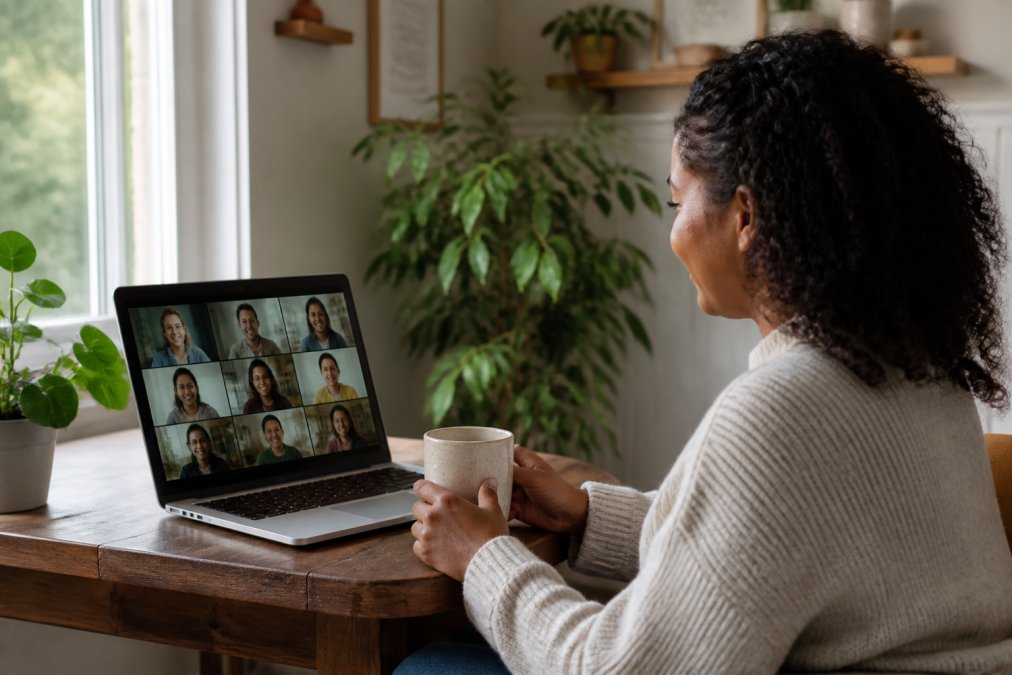
What's remarkable about virtual sessions is the anonymity option. Many platforms allow you to participate with your camera off, using a username instead of your real name. This removes a major barrier for people with social anxiety. Some members lurk for weeks, just listening, before ever speaking. That's completely acceptable and common.
The emotional tone varies. Some sessions feel like therapy, structured and processing-focused. Others feel more like peer mentoring where people exchange practical tips. Most fall somewhere in between. You'll encounter genuine vulnerability and also humor, hope, and breakthroughs that create tangible relief in the group.
Confidentiality is foundational. Most groups operate under a "what's shared here stays here" agreement. If you're worried about privacy, ask explicitly before joining about recording policies and anonymity options.
Online Group Therapy vs Support Groups: Key Differences
The distinction between online group therapy and support groups is critical because they serve different purposes.
Group therapy involves a licensed mental health professional facilitating the session. The therapist maintains therapeutic boundaries and is responsible for clinical care of participants. Sessions are confidential like individual therapy and structured around evidence-based treatment modalities such as cognitive behavioral therapy (CBT) or dialectical behavior therapy (DBT). You're paying for professional clinical expertise.
Support groups are typically peer-led or facilitated by trained peer specialists with lived experience of anxiety. The focus is mutual support and shared experience, not clinical treatment. Support groups are often free or low-cost and emphasize what members learn from each other rather than expert guidance.
The practical difference: if you're in crisis or need someone to diagnose whether your symptoms require medication, group therapy with a licensed provider is appropriate. If you want to process your anxiety with people who understand it and exchange coping strategies, a support group serves that purpose. Many people do both.
Some platforms blur this line by including a licensed clinician who doesn't provide therapy but ensures the group stays safe. These hybrid models can be valuable if you want structure and professional oversight without formal therapy.
Anxiety Support Group Etiquette and Community Norms
Anxiety support groups function because members respect shared norms that maintain psychological safety.
The foundational principle is confidentiality. What someone shares in the group stays in the group. You don't repeat their stories or mention their name outside the group.
Active listening is expected. When someone shares, you listen without planning your response. The focus is on them, not on you.
Avoid giving unsolicited advice. When someone shares they're struggling with panic attacks, asking if they want suggestions is better than immediately offering five solutions. Better approach: share your own experience without positioning it as the solution.
Don't dominate the time. Groups have limited time, and everyone deserves space.
Respect anonymity and privacy settings. If someone uses a username, use that username. If their camera is off, don't ask them to turn it on.
Avoid toxic positivity, the tendency to rush someone's difficult feelings toward a positive spin. Sit with the difficulty first. Positivity comes later.
Honor the moderated space. If a facilitator sets a boundary, follow it. These boundaries protect the group.
Best Platforms for Mental Health Support
The landscape of platforms offering anxiety support groups is diverse. Some are nonprofit directories connecting you to local groups, others are commercial apps with built-in community features.
The best platform depends on what you're looking for: anonymity, specific anxiety types, facilitator-led vs. peer-led, free vs. paid, synchronous (live) vs. asynchronous (forum-style).
Anonymity and accessibility are primary considerations. If you have social anxiety, a platform that allows you to participate with your camera off and a username is essential. Check whether sessions are recorded and whether the platform sells data.
Specificity matters. A group focused on your specific anxiety type (social anxiety, health anxiety, panic disorder) accelerates your learning more than a generic anxiety group.
Facilitator credentials vary. Some platforms employ licensed therapists, others use trained peer specialists, others have volunteer moderators. There's no universally "best" option, it depends on whether you want clinical guidance or peer support.
Soul Perfect offers a community-based approach where members share personal stories and connect through intentional living, which appeals to people seeking a positivity-driven environment alongside peer support.
Consider trying multiple platforms. Most allow you to observe before participating, so you can assess the vibe and membership before committing.
Signs You Need Professional Mental Health Help Beyond a Support Group
Support groups are powerful, but they're not clinical treatment. If you're experiencing suicidal thoughts or self-harm urges, you need immediate professional intervention. Call the 988 Suicide and Crisis Lifeline (call or text 988) or go to your nearest emergency room.
If your anxiety severely impairs your functioning, you can't work, maintain relationships, or perform basic self-care, you need a clinical evaluation. A therapist can assess whether your anxiety meets diagnostic criteria and whether medication might help.
If you've tried multiple coping strategies and nothing is working, seek professional assessment. You might need a different treatment approach that requires professional guidance.
If you have untreated trauma, especially if anxiety symptoms started after a traumatic event, trauma-focused therapy is necessary. Support groups can be part of recovery, but trauma requires specialized clinical intervention.
If you're experiencing physical symptoms you can't explain, see a medical doctor first to rule out physical causes.
If you're considering medication or changing medication, that requires a psychiatrist or prescribing doctor.
The threshold for professional help is: if your anxiety significantly impacts your quality of life and self-help approaches aren't sufficient, seek professional assessment.
Getting Started: How to Find and Join the Right Group
Finding the right anxiety support group takes some exploration.
Start by identifying what you're looking for. Do you want anonymity or are you comfortable with your real name? Do you prefer live sessions or asynchronous forums? Are you looking for a specific anxiety type or general anxiety support? How much time can you commit? These answers narrow your search significantly.
Search platforms that aggregate support groups. The National Alliance on Mental Illness (NAMI) maintains a directory of support groups by condition and location. The Anxiety and Depression Association of America (ADAA) also lists support groups and resources. These are reliable, vetted sources.
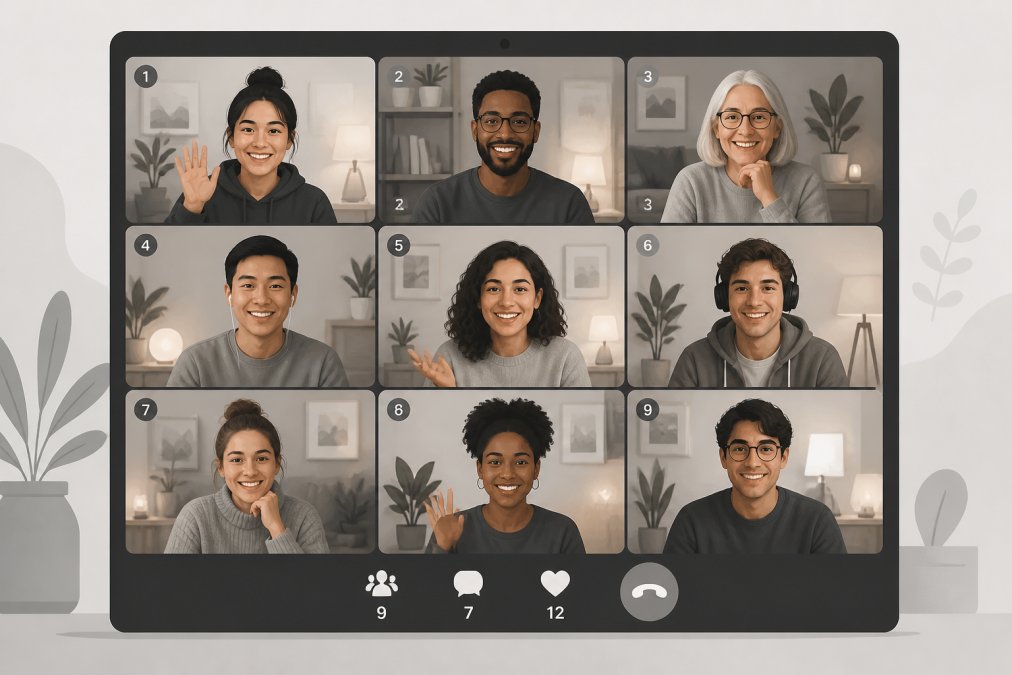
Try a few sessions before committing. Most groups allow you to observe before participating. Attend multiple sessions if possible. Notice the tone, the facilitator's style, and whether members seem genuinely supportive.
Ask questions before joining. Contact the facilitator or group admin about confidentiality practices, whether sessions are recorded, the group's focus, typical attendance, and how to participate.
Set realistic expectations. The first session will feel awkward. Give it at least three sessions before deciding it's not for you.
Consider starting with a structured platform. Apps and websites designed for support communities often have better moderation and clearer norms. Soul Perfect and similar platforms create intentional community spaces where people can share stories and connect around personal growth, which can feel less intimidating than traditional support group formats.
Don't settle for a group that doesn't feel safe. If a group has boundary violations or a facilitator who doesn't maintain structure, leave. Your psychological safety is non-negotiable.
The goal is finding a group where you feel genuinely heard, where people share without judgment, and where you leave feeling less alone.
Can online support groups help anxiety? Absolutely, but they're most effective when combined with professional help if your anxiety is severe, when you find a group that matches your needs and values, and when you approach participation with genuine openness. The peer-to-peer connection, shared experience, and practical coping strategies you gain from a support group create a foundation for recovery that isolation cannot. If you're struggling with anxiety and considering support, start by exploring what's available in your area or online. The barrier to entry is low, the potential benefit is high, and you might discover a community that fundamentally changes how you experience your anxiety.
Frequently Asked Questions
Are online support groups effective for anxiety?
Yes, online support groups help anxiety by providing peer-to-peer connection, shared coping strategies, and a safe space to discuss symptoms without judgment. Members benefit from knowing others face similar challenges. However, effectiveness depends on finding the right group, consistent participation, and your willingness to engage. They work best as part of a broader mental wellness plan, especially when combined with professional support if needed.
What is the difference between online group therapy and support groups?
Online group therapy is led by a licensed mental health professional who provides clinical intervention and treatment for specific mental health conditions. Support groups are typically peer-led or facilitator-led by trained volunteers, focusing on shared experience and emotional support rather than clinical diagnosis or treatment. Group therapy costs more and requires a therapist's expertise; support groups emphasize community-based, member-led discussion and are often free or low-cost.
How do I know if an online support group is right for me?
Look for groups focused on your specific anxiety type (social anxiety, panic disorder, generalized anxiety). Check whether the group is moderated to ensure psychological safety and confidentiality. Attend a session to gauge the tone and whether members feel genuine. Consider your comfort level with anonymity, video participation, or text-only options. If you feel pressured to share or the group lacks structure, it may not be the right fit.
Should I join an online support group instead of seeing a therapist?
Support groups complement therapy but should not fully replace it, especially for severe anxiety disorder or panic attacks. Support groups provide community and coping strategies; therapy offers personalized clinical intervention and evidence-based treatment. Many people benefit most from both: therapy for diagnosis and treatment planning, support groups for ongoing peer connection and accountability. If your symptoms significantly interfere with daily life, start with professional help.
This article was written using GrandRanker