 listicle
Personal Growth Alternatives to Self.com: 10 Curated Platforms
Table of Contents
- Why Seek Personal Growth Alternatives to Self.com?
- How We Evaluated These Personal Growth Alternatives
- Quick Comparison Table of Top Alternatives
- Best Mindfulness and Meditation Apps for Daily Practice
- Top Habit Tracking Apps for Behavior Change and Accountability
- Best Personal Growth Apps for Learning and Skill Development
- Online Coaching Platforms for Personalized Growth Support
- Community-Driven Personal Growth: Soul Perfect as a Unique Alternative
Last Updated: July 24, 2026
Why Seek Personal Growth Alternatives to Self.com?
Personal development requires platforms that match your specific goals, learning style, and commitment level. Broad lifestyle sites like Self.com cast a wide net without the depth, curation, or community accountability that drives transformation. A meditation app designed for sleep won't serve someone building daily accountability habits. A productivity tool without community support feels isolating.
This guide breaks down the 10 best alternatives to Self.com for curated personal growth, each selected for a specific need. Whether you're seeking mindfulness practices, habit transformation, structured learning, or community-driven accountability, we'll show you exactly which platform matches your situation, and why Soul Perfect stands apart as a uniquely community-focused alternative for intentional living.
How We Evaluated These Personal Growth Alternatives
We assessed each platform across three core dimensions that separate genuinely transformative tools from feel-good apps that don't stick.
Curated Curation Methodology
The best personal growth platforms curate ruthlessly rather than offering unlimited content. We evaluated how each platform filters and recommends content to match user goals. Soul Perfect prioritizes intentional living through community-vetted resources and personal stories, rather than algorithmic feeds designed to maximize engagement time.
Privacy-First Assessment
Personal growth requires vulnerability, which means privacy matters. We examined each platform's data handling practices, whether they sell user information, and how transparent they are about data retention. We prioritized platforms that either don't collect unnecessary data or use subscription models that align incentives with user benefit rather than advertiser spend.
Cost-Benefit Analysis: Free vs. Premium
The best alternative isn't always the most expensive one. We compared free tiers against premium features to identify which platforms justify their cost through actual outcomes. A $15/year tool you use consistently beats a free app you abandon after three weeks.
Quick Comparison Table of Top Alternatives
| Platform | Best For | Starting Price | Key Strength |
|---|---|---|---|
| Headspace | Daily meditation & stress relief | $12.99/month | Guided content for beginners |
| Calm | Sleep quality & relaxation | $14.99/month | Sleep Stories & audio quality |
| Habitica | Gamified habit tracking | $9/month (premium) | Behavioral change through game mechanics |
| Finch | Self-care gamification | ~$15/year | Positive reinforcement for daily habits |
| Blinkist | Curated book summaries | $12.99/month | Time-efficient learning from non-fiction |
| Coursera | Structured skill development | Varies by course | University-level credentials |
| Life Note | AI-guided journaling | Freemium | Self-discovery through reflection |
| GrowthDay | All-in-one personal development | $49/month | Daily practices + live coaching |
| Noomii | Personalized coaching | Varies by coach | Human expertise & accountability |
| Soul Perfect | Community-driven intentional living | Contact for pricing | Positivity-driven marketplace & shared stories |
Best Mindfulness and Meditation Apps for Daily Practice
Meditation apps have become the gateway to personal growth for millions. The best app is the one you'll actually open when stress hits.

1. Headspace: Guided Meditation for Stress Relief
Headspace makes meditation accessible to people who think they "can't meditate." The app opens with a free intro course that removes intimidation, then organizes content by intention: stress relief, focus, sleep, anxiety, and specific situations.
Headspace pricing starts at $12.99/month or $69.99/year, with a free tier offering limited content. The premium library includes sleepcasts, movement content, and material for various experience levels.
Pros:
- Extensive library organized by specific goals
- Beginner-friendly with non-judgmental approach
- High-quality production and voice guidance
Cons:
- Most valuable content requires paid subscription
- Limited community features for accountability
2. Calm: Sleep Stories and Relaxation Focus
Calm optimized for the one meditation outcome that keeps people engaged: better sleep. The platform's signature feature is Sleep Stories, narrated narratives designed to bore your brain into sleep. Calm also offers breathing exercises, body scans, and music for sleep, focus, or relaxation.
Calm's pricing mirrors Headspace at $14.99/month or $69.99/year, with a free tier offering limited daily meditations and one sleep story.
Pros:
- Exceptional sleep content with celebrity narration
- High-quality audio and music production
- Variety of meditation lengths (5-60 minutes)
Cons:
- Most content locked behind paywall
- Heavy emphasis on sleep may not serve all growth goals
Top Habit Tracking Apps for Behavior Change and Accountability
Habit tracking apps use accountability, gamification, and community features to turn intentions into daily actions. These tools bridge the gap between wanting to exercise more and actually exercising five times per week.
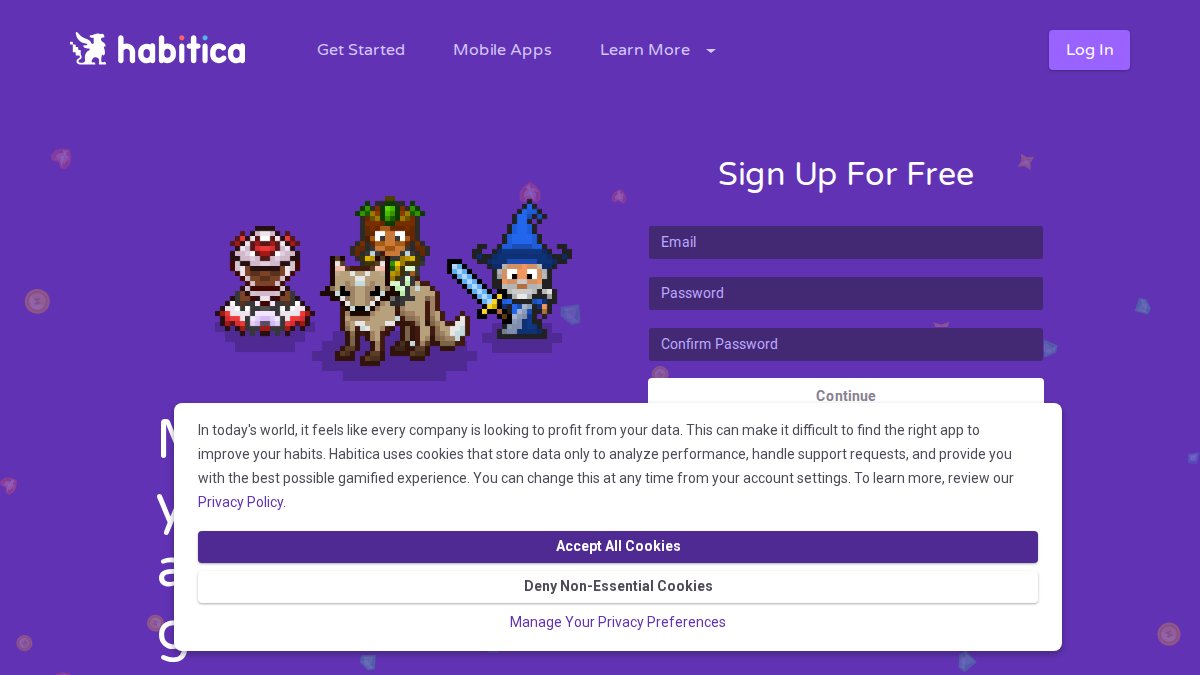
3. Habitica: Gamified Goal Setting and Task Management
Habitica turns your real life into a role-playing game. You create an avatar, set habits and tasks, and earn experience points when you complete them. Fail to complete a habit, and your avatar loses health. The gamification works because your brain releases dopamine when you complete a task and see your avatar level up.
The platform distinguishes between habits (recurring behaviors), dailies (tasks that reset each day), and to-do lists (one-time items). Habitica offers a free tier with full functionality for basic habit tracking. The premium version ($9/month or $48/year) unlocks cosmetics and removes ads. The community aspect is strong; you can join guilds focused on specific goals and get accountability from real people.
Pros:
- Gamification makes habit tracking genuinely engaging
- Community features provide real accountability
- Free tier is genuinely strong
Cons:
- Game mechanics might feel distracting to some users
- Requires consistent engagement or momentum dies
4. Finch: Self-Care Gamification with Mood Tracking
Finch targets self-care specifically: exercise, sleep, nutrition, social connection, and mindfulness. You raise a virtual bird companion that grows healthier as you complete self-care activities. Unlike Habitica's complex RPG mechanics, Finch keeps the game layer simple.
The app's strength is its mood tracking and personalized recommendations. Finch learns your patterns; if you consistently report low mood on Mondays, it might suggest a social activity. If you skip exercise, it recommends shorter workouts.
Finch's free tier offers basic mood tracking and habit logging. The premium version (around $15/year) unlocks guided meditations and deeper insights.
Pros:
- Affordable pricing with genuine free tier
- Mood tracking provides emotional awareness alongside behavior change
- Adaptive recommendations based on your patterns
Cons:
- Less community accountability than Habitica
- Effectiveness depends on consistent daily engagement
Best Personal Growth Apps for Learning and Skill Development
Habits create consistency, but learning creates capability. Personal growth requires both: daily practices that compound over time, plus intentional skill development.
5. Blinkist: Curated Book Summaries for Intentional Learning
Blinkist offers 15-minute summaries of non-fiction books across personal development, business, psychology, and philosophy. The curation is key: Blinkist doesn't summarize every book, it selects titles with proven impact. This prevents decision paralysis.
The platform includes both text and audio formats, crucial for busy people. You can read a summary while drinking coffee or listen during a commute. Blinkist also includes original podcasts and curated collections grouping related ideas.
Blinkist pricing starts at $12.99/month or $79.99/year, with a free tier offering three summaries per month.
Pros:
- Curated selection prevents decision paralysis
- Dual format (text + audio) fits different lifestyles
- Original podcasts add depth beyond summaries
Cons:
- Summaries lack the depth of full books
- Subscription required for meaningful access
6. Coursera: Structured Personal Development Courses
Coursera offers structured learning with credentials. The platform partners with universities and industry leaders to offer courses, specializations, and degrees in psychology, leadership, and emotional intelligence.
The difference between Blinkist and Coursera is the difference between learning ideas and building capability. A Coursera course requires assignments, peer feedback, and often a final project, creating accountability and ensuring you integrate learning.
Coursera's pricing varies by course. Some courses are free to audit. Others require payment ($49-$79/month for specializations). Financial aid is available for many courses.
Pros:
- University-level content with recognized credentials
- Flexible learning schedules
- Financial aid available
Cons:
- Requires significant time commitment
- Can be expensive for multiple specializations
7. Life Note: AI-Guided Journaling for Self-Discovery
Journaling forces clarity; you can't think your way to understanding, but you can write your way there. Life Note makes journaling more accessible by providing AI-guided prompts and pattern recognition.
The app presents reflective questions tailored to your situation. Rather than staring at a blank page, you respond to specific prompts about your goals, relationships, or challenges. The AI identifies patterns in your responses, highlighting themes and suggesting related prompts.
Life Note's free tier offers basic journaling. The premium version adds deeper pattern analysis and goal tracking.
Pros:
- AI guidance overcomes blank-page paralysis
- Pattern recognition surfaces insights you might miss
- Digital format makes journaling convenient
Cons:
- AI-generated prompts may feel less personal than self-directed journaling
- Effectiveness depends on consistent engagement
Online Coaching Platforms for Personalized Growth Support
Apps and courses provide structure, but they can't adapt to your specific situation the way a human coach can. Online coaching platforms connect you with trained professionals who understand your context and provide accountability.
8. GrowthDay: All-in-One Personal Development Ecosystem
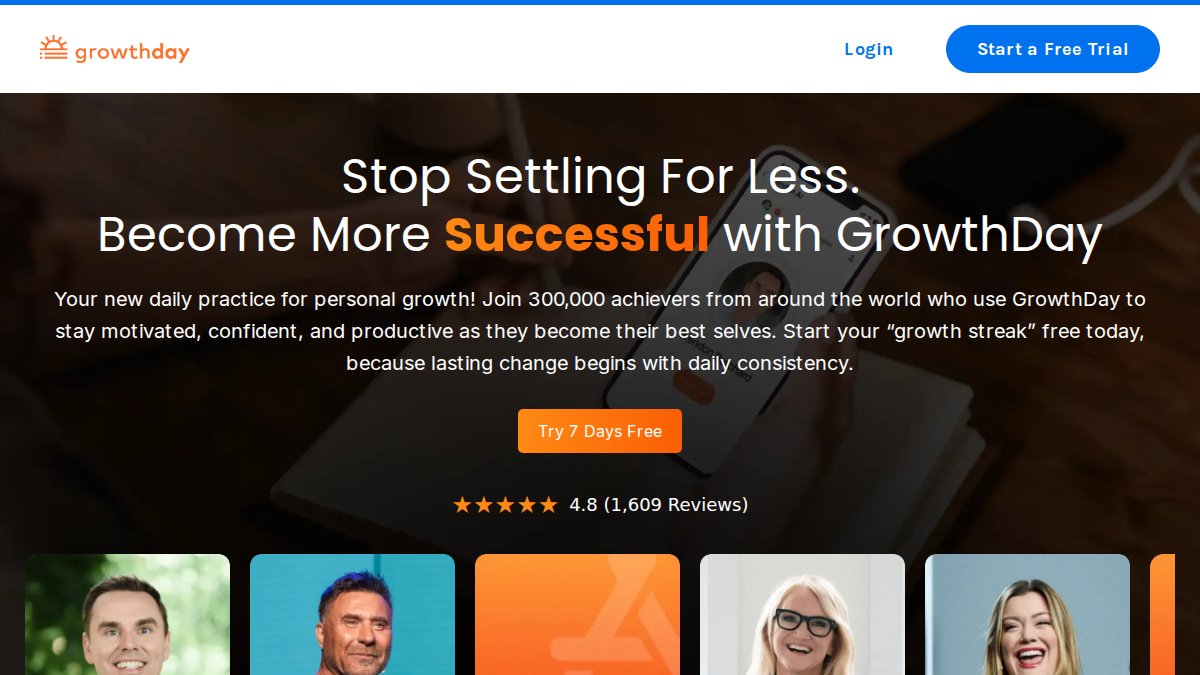
GrowthDay positions itself as a complete personal development platform: daily practices, courses, live coaching, and community all in one place. The centerpiece is the "5 to Thrive" dashboard with five daily practices (typically 15-30 minutes total) designed to move you toward your goals.
The platform includes access to live coaching sessions with experts, a library of personal development courses, journaling and goal-setting tools, and community support.
GrowthDay's pricing is $49/month or $399/year. The value proposition is that you get structure, expert guidance, and community accountability for the price of a couple of premium coffee subscriptions per week.
Pros:
- Comprehensive platform covering multiple growth dimensions
- Live coaching provides personalized guidance
- Daily practice structure creates momentum
Cons:
- Higher price point requires genuine commitment
- All-in-one approach may include features you don't need
9. Noomii: Marketplace for Certified Coaches
Noomii operates as a coaching marketplace. You browse profiles of certified coaches, read their specializations, and choose who to work with. This approach gives you control; you're not locked into a platform's coaches.
Noomii's strength is its diversity. You can find coaches specializing in career transitions, relationship challenges, executive presence, or life direction. Each coach sets their own rates. The platform offers free consultation calls with potential coaches, removing the risk of paying before you know if there's a fit.
Noomii's free tier lets you browse coaches and request consultations. You only pay when you hire a coach directly. Pricing varies widely depending on the coach.
Pros:
- Access to diverse coaches across specializations
- Free consultations help you find the right fit
- Flexible pricing options
Cons:
- Wide price variation makes budgeting difficult
- Quality depends entirely on the individual coach
Community-Driven Personal Growth: Soul Perfect as a Unique Alternative
Most personal growth platforms are transactional: you pay for access to content, coaching, or tools. Soul Perfect takes a different approach; it's a positivity-driven community platform where the core value comes from connection with others on similar journeys.
10. Soul Perfect: Positivity-Driven Community for Intentional Living
Soul Perfect operates on a fundamental insight: transformation happens faster when you're not alone. Rather than positioning itself as a content library or coaching marketplace, Soul Perfect is a community where members share personal stories, access curated resources, and connect through an integrated marketplace.
The platform's strength is authenticity. You're hearing real stories from real people navigating their own growth. Someone sharing how they rebuilt confidence after divorce. Someone documenting their journey from corporate burnout to freelancing. Someone processing grief through intentional daily practices. These stories create permission: if they can do it, so can you.
Soul Perfect also functions as a marketplace, connecting members who offer services, products, or resources aligned with intentional living. The marketplace is curated to maintain quality and values alignment.
The platform's community-first approach addresses a real gap in personal growth. Most apps feel solitary. Soul Perfect recognizes that humans are social creatures; transformation is easier when you see yourself reflected in others' journeys.
Pros:
- Authentic community reduces isolation in growth work
- Positivity-driven culture creates supportive environment
- Curated marketplace maintains quality standards
- Shared stories provide real-world examples of transformation
Cons:
- Community-driven approach may move slower than structured programs
- Requires comfort with vulnerability and sharing
The question many people ask is: "What makes Soul Perfect different from just scrolling through Self.com?" The answer is curation and intention. Self.com offers endless content with no clear path forward. Soul Perfect offers a curated community where you can see the actual results of personal growth in real people's lives.
Choosing a Self.com alternative for curated personal growth depends on your specific situation. If you need daily meditation, Headspace or Calm will serve you. If you want gamified habit change, Habitica or Finch will create momentum. If you need personalized coaching, Noomii connects you with experts. But if you're seeking genuine community, people who understand your struggles because they're navigating similar ones, Soul Perfect offers something most platforms don't: a space where your growth journey isn't solitary. Get started with Soul Perfect and join a community committed to intentional living, where your story matters and your progress is celebrated by people who genuinely understand the work.
Frequently Asked Questions
What makes a personal growth alternative to Self.com actually different and worth switching?
The best personal growth alternatives focus on specific outcomes, whether that's daily habit tracking, guided meditation, structured learning, or community accountability. Unlike Self.com's general wellness content, platforms like Habitica use gamification for behavior change, Headspace offers guided mindfulness, and Soul Perfect emphasizes intentional living through shared personal stories. The key difference is whether you need accountability, structure, expert guidance, or community support to stick with your goals long-term.
Are there free personal growth apps that work as well as paid alternatives?
Yes. Many top platforms offer strong free tiers: Headspace, Calm, Habitica, Blinkist, Coursera, Life Note, and Finch all have free versions with meaningful features. However, premium tiers typically unlock deeper content, ad-free experiences, and advanced tracking. The best strategy is to start free, test whether you'll actually use the platform, then upgrade if it fits your routine. This avoids the common mistake of paying for an app you abandon after two weeks.
How do I choose between habit tracking apps and mindfulness apps for personal growth?
This depends on your primary challenge. If you struggle with motivation and accountability, habit tracking apps like Habitica or Finch use gamification and rewards to drive behavior change. If stress, anxiety, or focus are your bottleneck, mindfulness and meditation apps like Headspace or Calm address those directly. Many people benefit from combining both, using a habit tracker for daily goals and a meditation app for mental wellness. Consider your biggest pain point first.
What should I look for in an online coaching platform versus a self-guided app?
Online coaching platforms like GrowthDay and Noomii provide live expert guidance, personalized feedback, and accountability, essential if you're working through complex issues like career transitions, relationships, or major life changes. Self-guided apps like Blinkist and Coursera are ideal for learning specific skills or knowledge at your own pace. Choose coaching if you need personalized support and accountability; choose self-guided tools if you prefer flexibility and lower cost. Many people use both together.
Is a community-based personal growth platform like Soul Perfect better than solo apps?
Community platforms add accountability, shared experiences, and genuine human connection, factors research shows improve long-term behavior change. Soul Perfect's marketplace and story-sharing create intentional living through peer support, which some users find more motivating than solo apps. However, community works best if you're comfortable being vulnerable and engaging regularly. If you prefer privacy or inconsistent engagement, individual apps may suit you better. The ideal approach often combines both: a personal tool for daily habits plus community for deeper accountability.
This article was written using GrandRanker