 listicle
Best Self-Improvement Communities for Beginners
Table of Contents
- What to Look for in a Self-Improvement Community for Beginners
- Top Self-Improvement Communities for Beginners
- 1. Soul Perfect: Positivity-Driven Community with Marketplace
- 2. The Fabulous: Gamified Habit Building for Daily Routines
- 3. Habitica: Role-Playing Game Meets Accountability
- 4. Insight Timer: Meditation and Mindfulness Community
- 5. Coach.me: Free Habit Tracking with Optional Coaching
- 6. Actualized.org Forum: Deep-Dive Discussions on Personal Growth
- Personal Growth Habits for Beginners
- Self-Improvement Goal Setting Templates
- How to Stay Motivated in Self-Improvement
- Transitioning from Lurker to Active Participant
- Conclusion
Last Updated: August 18, 2026
What to Look for in a Self-Improvement Community for Beginners
Choosing the right self-improvement community for beginners can feel overwhelming. You're looking for a space where you feel safe enough to be vulnerable, supported enough to stay committed, and challenged enough to actually grow.
The difference between a community that transforms your life and one you abandon after two weeks comes down to three critical factors: psychological safety, alignment with your specific interests, and accommodation for different participation styles, whether you're ready to share or prefer to observe first.
Psychological Safety and Moderation
A self-improvement community for beginners lives or dies based on how safe members feel. Without psychological safety, people lurk silently or disappear entirely.
Look for communities with active moderation and clear guidelines. This creates boundaries that allow real conversation to happen. Communities with explicit codes of conduct, responsive moderators, and a culture that normalizes struggle tend to retain beginners longer. The best communities acknowledge that beginners are often at their most vulnerable, admitting you want to change means admitting you're not where you want to be. A good community doesn't make you feel broken for being here; instead, it normalizes the messy, non-linear nature of personal growth.
Niche-Specific Community Filtering
Generic "self-improvement" communities often fail beginners because they try to serve everyone. Someone focused on career advancement has different needs than someone rebuilding after a breakup or developing a meditation practice.
The most effective communities for beginners narrow their focus, habit formation, mindfulness, financial independence, or relationship skills. This specificity matters because the advice, resources, and peer support are actually relevant to your situation. When evaluating a community, ask: Does this have a clear identity, or does it claim to help with everything? The more focused the mission, the more useful the content will be.
Support for Lurkers and Active Participants
Not everyone is ready to share their personal story on day one. Some beginners need to observe first, build trust, and gradually participate.
The best self-improvement communities accommodate both styles. They offer valuable content you can consume passively, articles, courses, discussion threads, and create low-pressure entry points for participation: answering a poll, reacting to a post, or asking a question in a beginner section. Communities that shame lurkers or make participation mandatory tend to lose beginners quickly. The ones that thrive recognize that active participation grows naturally once trust is established.
Top Self-Improvement Communities for Beginners
1. Soul Perfect: Positivity-Driven Community with Marketplace
Soul Perfect was built specifically for people seeking encouragement and intentional living. Members share personal stories, creating authentic connection right away. You're hearing from real people navigating real challenges, not generic advice from faceless experts. The integrated marketplace provides curated resources aligned with the community's values.
The positivity-driven approach matters for beginners especially. When you're starting a personal growth journey, cynicism can derail you quickly. Soul Perfect's culture of encouragement creates psychological safety.
Getting started: Visit Soul Perfect and explore the community sections before committing. Read a few personal stories to assess whether the community's vibe matches what you're looking for.
2. The Fabulous: Gamified Habit Building for Daily Routines
The Fabulous transforms building daily routines into something engaging. This app uses behavioral science principles to guide you through "Journeys", structured programs that help you build specific habits.
For beginners, The Fabulous solves a real problem: knowing what to do is different from actually doing it consistently. The app breaks habit formation into tiny, manageable steps and celebrates small wins. The gamified experience, visual progress, streak counters, guided coaching, provides external motivation most people need when starting out. The free tier gives you enough to test whether this approach works for you.
Getting started: Download The Fabulous and try the free version for at least two weeks. Pick one habit to build, not three. The app works best when you focus on a single journey at a time.
3. Habitica: Role-Playing Game Meets Accountability
Habitica gamifies personal development in a way that works for competitive people or anyone who responds well to game mechanics. You create an avatar, complete quests based on your real-world habits and tasks, and earn rewards to customize your character.
The genius of Habitica for beginners: It makes accountability fun. You're not just tracking whether you meditated, you're leveling up a character. You can join guilds and parties, creating peer accountability without the pressure of a formal support group. People in your party benefit when you complete your habits, adding a social dimension to personal growth.
Getting started: Spend 20 minutes setting up your Habitica account. Start with just three habits, not ten. The most common mistake is overloading your task list, which makes the system feel overwhelming instead of motivating.
4. Insight Timer: Meditation and Mindfulness Community
Insight Timer is the largest free meditation app in the world. What makes it special for beginners is the community element. You're not just accessing guided meditations, you're part of a global community of people practicing mindfulness together.
For beginners, this matters. Meditation can feel isolating if you're doing it alone. Insight Timer's live group meditations and discussion groups create connection around a shared practice. You can see that thousands of other people are meditating right now, which normalizes the practice and reduces the sense of doing something unfamiliar.
The free tier is genuinely generous, over 300,000 free meditations, sleep tracks, and music. You don't need to pay to get real value.
Getting started: Start with a 10-minute guided meditation from a teacher whose voice you like. Don't overthink it.
5. Coach.me: Free Habit Tracking with Optional Coaching
Coach.me is built around a simple idea: you track your habits and get support from a community of people working on the same goals. The core habit tracker is free, so you can test whether this approach works for you without paying.
What makes Coach.me useful for beginners: The community is organized by specific goals. You join a group of people working on the same habit, running, meditation, reading, and you see their progress, struggles, and wins. This creates accountability and normalizes the difficulty of behavior change.
Getting started: Pick one habit to track. Join the community for that habit. Check in daily, even if it's just to mark "done" or write a quick note about how it went. Consistency matters more than perfection.
6. Actualized.org Forum: Deep-Dive Discussions on Personal Growth
Actualized.org Forum is for beginners who want to think deeply about personal growth, not just follow a program. This text-based forum features thoughtful discussions on philosophy, spirituality, relationships, career, and life purpose.
The community here is more introspective than gamified. If you're the type of person who learns by reading others' experiences and engaging in real dialogue, this is valuable. The downside: There's no structure, coaching, or gamification. You need to be self-directed enough to find relevant threads and engage meaningfully.
Getting started: Browse the forums for topics relevant to your situation. Read threads before posting. The community values thoughtful participation over quantity.
Personal Growth Habits for Beginners
Starting Small with Daily Routines
The biggest mistake beginners make is trying to transform their entire life at once. You decide to meditate for an hour, exercise daily, read two books a month, journal, and eat perfectly, all starting Monday. By Wednesday, you've abandoned everything.
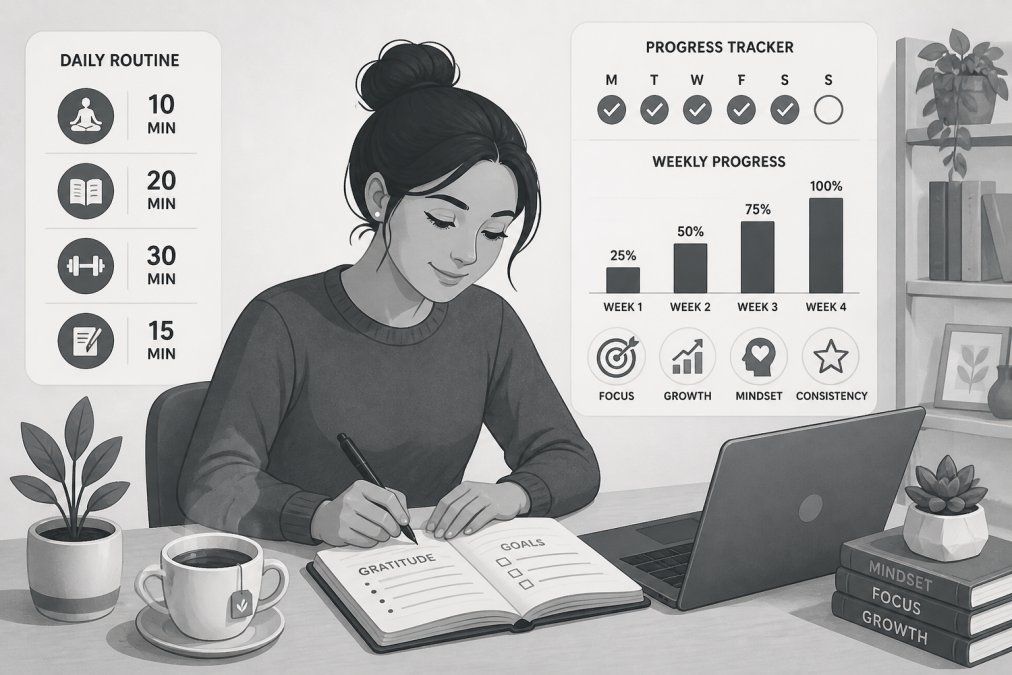
Personal growth happens through small, consistent daily routines. A 10-minute morning meditation is better than planning a 60-minute practice you never do. A five-minute reflection before bed beats a two-hour journaling session you avoid.
The key is building routines so small they feel almost trivial. You're not trying to become a different person overnight. You're creating behaviors you can actually sustain. Once a small routine becomes automatic, usually after 30-60 days, you can layer in something else. Start with one habit and let it become part of your identity before adding more.
Building Accountability Through Community Engagement
Accountability is the single most underrated factor in personal growth. You can have the best plan in the world, but without accountability, you'll abandon it when motivation dips.
Community accountability works differently than self-accountability. When you're only accountable to yourself, it's easy to rationalize skipping a day. When you're accountable to a community, there's gentle social pressure that keeps you going.
Show up regularly and report your progress. This doesn't mean writing a novel, a simple "Day 15 of meditation" is enough. The act of reporting creates commitment, and seeing others' consistency motivates you to keep going.
Self-Improvement Goal Setting Templates
The SMART Goal Framework for Beginners
SMART goals work because they turn vague intentions into specific, trackable targets. A SMART goal is Specific, Measurable, Achievable, Relevant, and Time-bound.
Instead of "I want to be healthier," a SMART goal is "I will walk 30 minutes, five days a week, for the next 12 weeks." Instead of "I want to be more productive," it's "I will complete my most important task before 10 AM, Monday through Friday, for the next month."
The measurable part is crucial for beginners. You need to know whether you succeeded. Vague goals like "be more confident" are hard to track. Specific goals like "speak up in one meeting per week" are easy to measure.
When setting SMART goals, start with the time-bound piece. Pick a short timeframe, 30 days or 12 weeks. This makes the goal feel achievable and prevents overwhelm. Once you hit one goal, you can set another.
Using Community Resources for Goal Refinement
Your first goal attempt won't be perfect. Communities help you calibrate. Share your goal and ask for feedback. Have others successfully worked toward similar goals? What did they find challenging? What helped them succeed?
As you work toward your goal, use your community to troubleshoot obstacles. If you miss a day, don't spiral. Post about it and ask how others handle setbacks. You'll find that missing one day is normal, and the key is getting back on track the next day.
How to Stay Motivated in Self-Improvement
Progress Tracking and Celebrating Small Wins
Motivation is not constant. It spikes at the beginning when everything feels new and possible, then dips around week three when the novelty wears off.
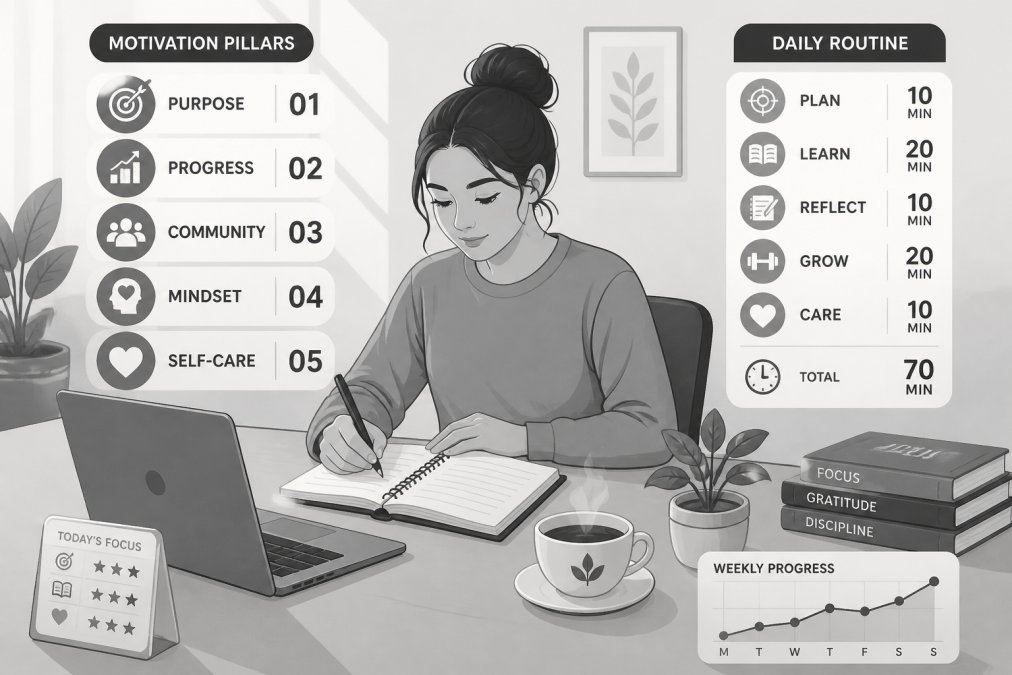
The antidote is progress tracking. When motivation dips, visible progress keeps you going. Habit-tracking apps show you your streak, completion percentage, and overall progress. These metrics matter psychologically. Celebrating small wins also matters. When you hit 30 days of consistency, acknowledge it. When you complete your first week of a new habit, tell someone. These celebrations reinforce the behavior and keep motivation alive during inevitable dips.
Finding Your Role in the Community
Motivation also comes from feeling like you belong. In the beginning, you're a beginner receiving support. But as you progress, your role can shift. You might start answering questions from newer members, sharing what you've learned, or mentoring someone a few steps behind you.
This shift is powerful. Teaching others deepens your own learning and gives you a sense of purpose within the community. You're no longer just taking, you're contributing. The best self-improvement communities for beginners create pathways for this transition, recognizing that today's beginner is tomorrow's experienced member.
Transitioning from Lurker to Active Participant
Many beginners start as lurkers, reading, observing, learning, but not posting. This is fine initially, but at some point, active participation accelerates your growth.
The transition doesn't need to be dramatic. Start small: react to someone else's post, answer a simple poll, ask a genuine question. These low-pressure actions build confidence and help you understand that the community is welcoming.
Most communities have dedicated beginner sections or welcome threads. Start there. The stakes feel lower, and you're surrounded by people in the same situation. As you become more comfortable, increase your participation gradually. Share a small win, ask for advice, eventually share a personal story or mentor someone else.
Participation is a skill. You get better with practice. The communities that retain beginners longest are the ones that make this progression feel natural and supported.
Choosing the right self-improvement community for beginners is one of the most important decisions in your personal growth journey. The difference between success and abandonment often comes down to whether you feel safe, supported, and genuinely part of something meaningful.
Soul Perfect creates that environment through its positivity-driven approach and focus on intentional living. The shared personal stories and integrated marketplace mean you're not just accessing generic advice, you're connecting with a community that understands your journey. Start by exploring the community sections, reading member stories, and seeing whether the culture resonates with you. The psychological safety and encouragement you'll find there can be the foundation that keeps you committed when motivation inevitably dips.
Frequently Asked Questions
Where should I start with a self-improvement community for beginners?
Start by identifying your primary goal, whether it's building daily routines, developing mental well-being, or finding accountability. Look for communities that match your learning style, offer psychological safety, and allow you to participate at your own pace. Many platforms let you observe before sharing, which is perfect for beginners. Soul Perfect, The Fabulous, and Coach.me all provide beginner-friendly entry points with clear onboarding and supportive environments designed for newcomers.
What personal growth habits should beginners focus on first?
Start with one small, consistent habit rather than overhauling everything at once. Daily routines like journaling, meditation, or a short workout build discipline and self-reflection. Community support amplifies success, as accountability partners and peer feedback help you stick with habits. Most beginners see results within 2-3 weeks when they track progress and celebrate small wins. Many communities offer habit templates and guided routines to make starting easier.
How do I know if a self-improvement community is actually trustworthy?
Check for clear moderation, community guidelines, and member testimonials. Trustworthy communities foster psychological safety, meaning members feel secure sharing vulnerabilities without judgment or toxicity. Look for platforms with transparent policies, active moderators, and a focus on constructive feedback rather than criticism. Avoid communities where members post unverified claims or pressure you to share before you're ready. Soul Perfect emphasizes intentional living and genuine connections, which signals a commitment to authentic member experiences.
Can I really stay motivated using an online self-improvement community if I'm a beginner?
Yes, when you find the right fit. Online communities provide consistent accountability, progress tracking, and peer encouragement that keep motivation high. Gamified platforms like Habitica add fun elements, while structured programs like Mindvalley offer expert coaching. The key is choosing a community that matches your needs, not just signing up and hoping. Setting specific goals, tracking progress visibly, and engaging regularly with members dramatically increases follow-through and long-term success.
This article was written using GrandRanker