 comparison
Affirmations vs Visualization for Anxiety
Table of Contents
- What Positive Affirmations and Visualization Actually Do
- Positive Affirmations for Anxiety: How They Work
- Visualization Techniques for Anxiety: Building Mental Imagery
- How to Use Affirmations for Anxiety: A Practical Approach
- Guided Imagery for Anxiety: Creating Tranquil Scenes
- Head-to-Head: Which Technique Works Better for Your Anxiety
- Combining Affirmations and Visualization for Maximum Benefit
- When Affirmations Feel Unbelievable or Visualization Feels Difficult
- Frequently Asked Questions
Last Updated: October 6, 2026
What Positive Affirmations and Visualization Actually Do
When considering affirmations vs visualization anxiety relief, these are two distinct mental techniques that approach anxiety from different angles. Many people are drawn to both because they address the same problem, anxious thoughts and emotional distress, but through different mechanisms.
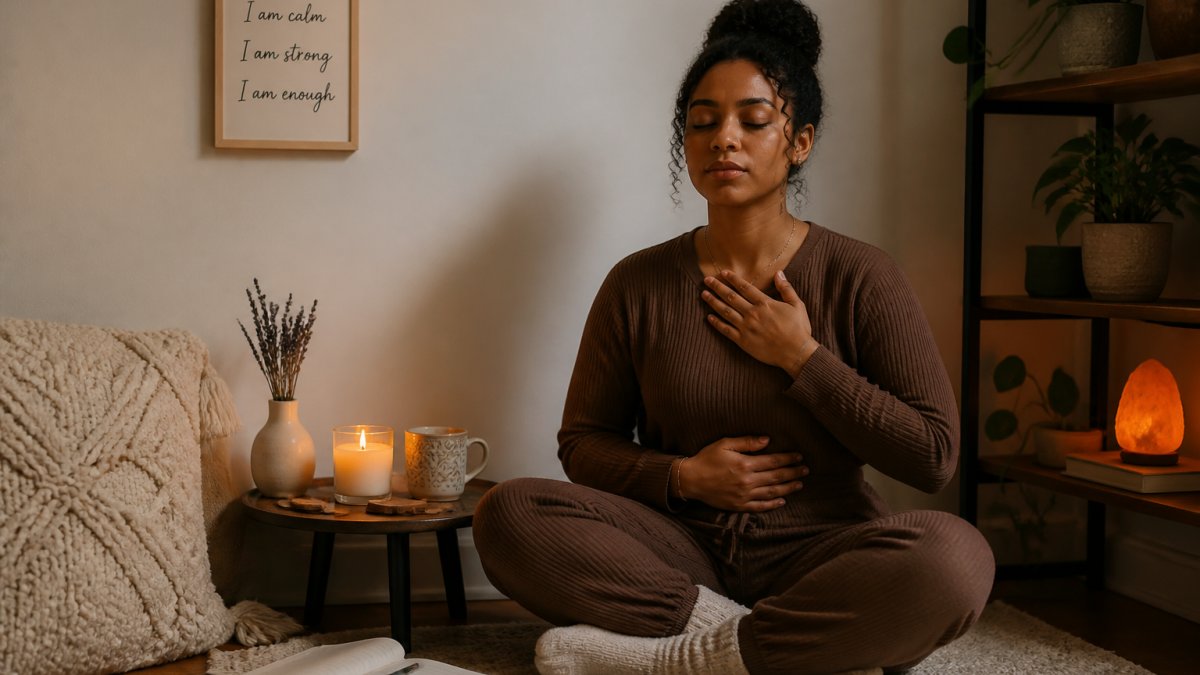
Positive affirmations are repeated statements designed to counter negative self-talk and reinforce calming beliefs. You speak or write phrases like "I am safe" or "I can handle this moment" to reshape your internal dialogue. Visualization uses mental imagery to create a sensory experience of calm, imagining a tranquil scene and engaging sight, sound, and sometimes touch to ground yourself in that imagined safety.
The key difference: affirmations work through language and belief-shifting, while visualization works through sensory imagination. Both reduce worry and nervous feelings, but they activate different parts of how your mind processes anxiety, so understanding this distinction helps you choose which fits your symptoms and personality.
Positive Affirmations for Anxiety: How They Work
Affirmations interrupt the cycle of anxious thoughts by replacing them with intentional, calming statements. When your mind loops through worry, an affirmation breaks that pattern with a competing statement: "I am capable" or "This moment is manageable."
The mechanism is straightforward: repetition rewires your self-talk. Over time, hearing yourself say "I choose calm" or "I am enough" feels less like wishful thinking and more like truth, reducing the intensity of nervous feelings and creating space between the anxious thought and your reaction.
Affirmations work best when they feel believable. A statement too distant from your current reality, "I am completely fearless", may backfire, creating resistance instead of reassurance.
Common affirmations for anxiety include:
- "I am safe in this moment"
- "My body is calm and relaxed"
- "I can handle whatever comes"
- "I choose to focus on what I can control"
- "This feeling is temporary"
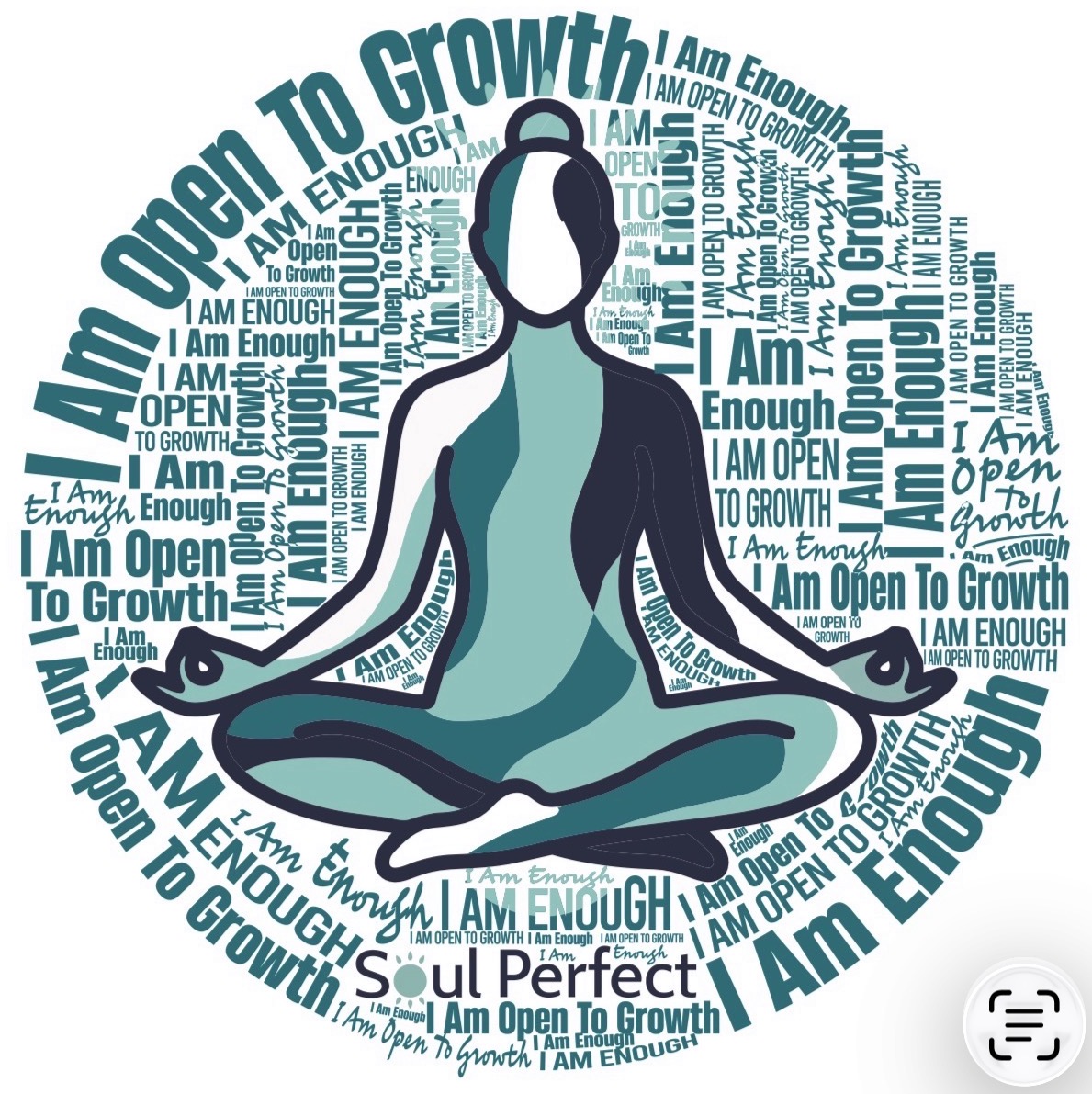
The repetition is essential. A single affirmation whispered once won't shift your nervous system. Many people pair affirmations with a physical reminder; [Soul Perfect's I Am Enough Framed poster](https://soulperfect.shop/products/framed-poster-1) provides a visual anchor for affirmations you return to throughout your day.
Visualization Techniques for Anxiety: Building Mental Imagery
Visualization creates a mental escape route when anxiety rises. Instead of fighting the anxious thought, you redirect your attention to a place your mind perceives as safe, interrupting the stress response and allowing your nervous system to downshift.
The power of visualization lies in sensory detail. A vague image of "somewhere peaceful" won't engage your brain fully, but imagining the warmth of sun on your skin, the sound of waves, and the feeling of sand beneath your feet creates a multisensory experience your nervous system treats as real.
Guided imagery for anxiety typically follows a structure: you settle into a comfortable position, close your eyes, and follow a guide (or your own mental direction) through a peaceful scene, noticing colors, textures, sounds, and sensations that keep your attention anchored in the imagined environment rather than the worry in your head.
Common visualization scenarios for anxiety include:
- A quiet forest with dappled sunlight
- A calm beach or lakeside
- A cozy room filled with soft light
- A mountain meadow with gentle wind
- A safe, personal space from your memory
The beauty of visualization is that it requires no special equipment or belief system, just your imagination and a few minutes of quiet.
How to Use Affirmations for Anxiety: A Practical Approach
Start by choosing affirmations that resonate with your specific anxiety. If you struggle with feeling out of control, "I am capable" or "I trust my ability to handle challenges" works better than affirmations about being fearless. If your anxiety centers on self-worth, "I am enough" or "I deserve calm" address the root more directly.
Write your chosen affirmations down, since the act of writing engages your brain differently than reading or hearing them.
Repeat your affirmations aloud when possible. Speaking them activates different neural pathways than silent reading. Hear your own voice saying "I am safe" or "I choose calm", this creates a stronger imprint than passive consumption.
Create a daily practice, since consistency matters more than duration. Five minutes each morning builds the habit and reinforces the belief shift; during an anxious moment, pause and repeat your chosen affirmation three to five times, slowly and with intention.
Pair affirmations with physical reminders. Products like [Soul Perfect's Believe in Yourself Amber jar soy candle](https://soulperfect.shop/products/amber-jar-soy-candle) work as anchors, not magic. Light the candle during your practice and the ritual becomes multisensory.
Guided Imagery for Anxiety: Creating Tranquil Scenes
To practice visualization, find a quiet space where you won't be interrupted for 5-10 minutes, sit or lie comfortably, close your eyes, and imagine your chosen tranquil scene in detail.
Start with what you see: colors, light, shapes. Is it daytime or dusk? Are there trees, water, sky? Don't force the image, let it emerge naturally, and if your mind wanders, gently redirect it back without frustration.
Add sound next: wind, water, birds, rustling leaves, silence? Then move to sensation. What does the air feel like on your skin, warmth, coolness, a gentle breeze? Can you feel textures, soft grass, smooth sand, cool water?
The more senses you engage, the more real the experience becomes to your nervous system. A complete sensory visualization, sight, sound, touch, even smell, creates a powerful shift in your emotional state.
Believe in Yourself Amber jar soy candle →
Spend 5-10 minutes in your imagined scene, with no goal other than being present in the imagery. When you're ready, slowly open your eyes and notice how your body feels. Many people emerge noticeably calmer, with reduced tension and a quieter mind.
Practice regularly, ideally daily, though even a few times a week builds your capacity to access calm through visualization.
Head-to-Head: Which Technique Works Better for Your Anxiety
In the debate of affirmations vs visualization anxiety management, neither is objectively "better"; the best technique is the one you'll actually use and that produces results for your specific anxiety pattern.
| Factor | Affirmations | Visualization |
|---|---|---|
| How it works | Rewires self-talk through repetition | Redirects attention through sensory imagination |
| Time needed | 2-5 minutes, can be done anywhere | 5-10 minutes, requires quiet space |
| Best for | Anxious thoughts, negative self-talk | Feeling overwhelmed, needing mental escape |
| Difficulty | Low (straightforward statements) | Medium (requires sensory imagination) |
| Belief requirement | Some (you need to accept the statement) | Low (you just imagine, no belief needed) |
| When to use | Throughout the day, during worry spirals | When you need deeper calm, before bed |
Choose affirmations if: Your anxiety centers on anxious thoughts, self-doubt, or negative self-talk. You respond well to language and repetition. You want a technique you can use anywhere, at work, in the car, during a conversation. You prefer active engagement (speaking, writing) over passive imagination.
Choose visualization if: Your anxiety manifests as physical tension or feeling overwhelmed. You have a strong imagination and enjoy sensory experiences. You need a mental escape when anxiety peaks. You prefer a technique that doesn't require you to "believe" anything, you just experience the imagined scene.
The reality: Most people benefit from both. Affirmations address the mental loop of anxious thoughts. Visualization gives your nervous system a direct path to calm. Using them together often produces faster, more lasting results than either alone.
Combining Affirmations and Visualization for Maximum Benefit
The most effective anxiety relief strategy combines affirmations and visualization into a single practice. Here's how to integrate them:
Begin with visualization. Spend 5 minutes creating your tranquil scene with full sensory detail, then introduce an affirmation that reinforces the calm you're experiencing. While imagining a peaceful beach, for example, repeat "I am safe and calm" or "My body is relaxed."
The affirmation anchors the emotional state visualization creates. You're not just imagining calm, you're reinforcing it with language that deepens the belief. This creates a feedback loop: visualization drops you into the felt experience of calm, and affirmations cement that state into your nervous system.
Another approach: use affirmations to prepare for visualization. Spend 2-3 minutes repeating an affirmation like "I am open to calm" or "I can access peace" to prime your mind, then move into your guided imagery practice. The affirmation has already shifted your mental state, making the visualization more vivid and effective.
Create a ritual that combines both. Light one of [Soul Perfect's One Moment at a Time Amber jar soy candle](https://soulperfect.shop/products/amber-jar-soy-candle-2), spend 3 minutes with your chosen affirmations, then move into a 7-minute visualization. The candle's warm glow and scent anchor the entire practice.
When Affirmations Feel Unbelievable or Visualization Feels Difficult
Not every technique works for everyone, and that's okay. If affirmations feel false or create resistance, you're not doing it wrong, you've identified that this particular approach isn't your natural fit.
When affirmations feel unbelievable, the issue is usually that you've chosen statements too far from your current reality, so your mind rejects them as untrue.
If visualization feels difficult, you may be trying too hard.
Start with shorter visualizations, 2-3 minutes instead of 10, and build capacity gradually.
If neither affirmations nor visualization resonates after genuine practice, consider combining them with other grounding techniques: deep breathing, progressive muscle relaxation, or physical movement. Some people need multiple modalities to shift their nervous system.
Managing anxiety through affirmations and visualization gives you tools you can use anywhere, anytime. Both are accessible, require no special equipment, and work by shifting how your mind and body respond to stress.
Frequently Asked Questions
Are positive affirmations or visualization better for anxiety?
Neither is universally better, they work differently for different people and anxiety types. Affirmations work best for anxious thoughts and self-doubt, using repeated positive self-talk to reframe worry. Visualization excels at creating a sense of safety and grounding by engaging your senses in a calm mental scene. Many people find combining both techniques more effective than using one alone, since they address anxiety from different angles: cognitive (thoughts) and sensory (feeling safe).
How can positive affirmations help with anxiety?
Affirmations interrupt anxious thought patterns by replacing negative self-talk with calming statements. When anxiety triggers thoughts like 'I can't handle this,' repeating affirmations such as 'I am capable and strong' or 'I choose to focus on what I can control' redirects your mind toward reassurance and self-compassion. Consistency matters: daily repetition gradually shifts your baseline thinking patterns.
How do you use visualization to calm anxiety?
Visualization involves creating a detailed mental image of a peaceful, safe place using all your senses. Close your eyes and imagine a tranquil scene, a beach, forest, or quiet room, noticing colors, sounds, textures, and scents. Spend 5-10 minutes fully immersed in this mental imagery, allowing your body to relax as if you were physically there. Regular practice makes it easier to access this calm state when anxiety arises.
Can you combine affirmations and visualization for anxiety?
Yes, and it's often more powerful than either technique alone. Start with visualization to create a calm mental scene, then repeat affirmations within that space: 'I am safe here,' 'My body is relaxed,' or 'I trust myself.' This pairing anchors positive self-talk in a sensory experience, making affirmations feel more believable. A combined 10-15 minute daily practice can address both anxious thoughts and the physical tension anxiety creates.
What should I do if affirmations feel unbelievable or visualization is difficult?
Start smaller and more specific. Instead of broad affirmations like 'I am calm,' try micro-affirmations tied to real situations: 'I handled today's challenge' or 'This worry will pass.' For visualization, if imagining a perfect scene feels forced, begin by recalling a real place where you felt safe, your childhood home, a friend's house, or a favorite park, rather than inventing one. Patience and gradual practice matter more than perfection. If anxiety remains severe or these techniques feel impossible, speak with a mental health professional who can recommend additional coping strategies tailored to your needs.