
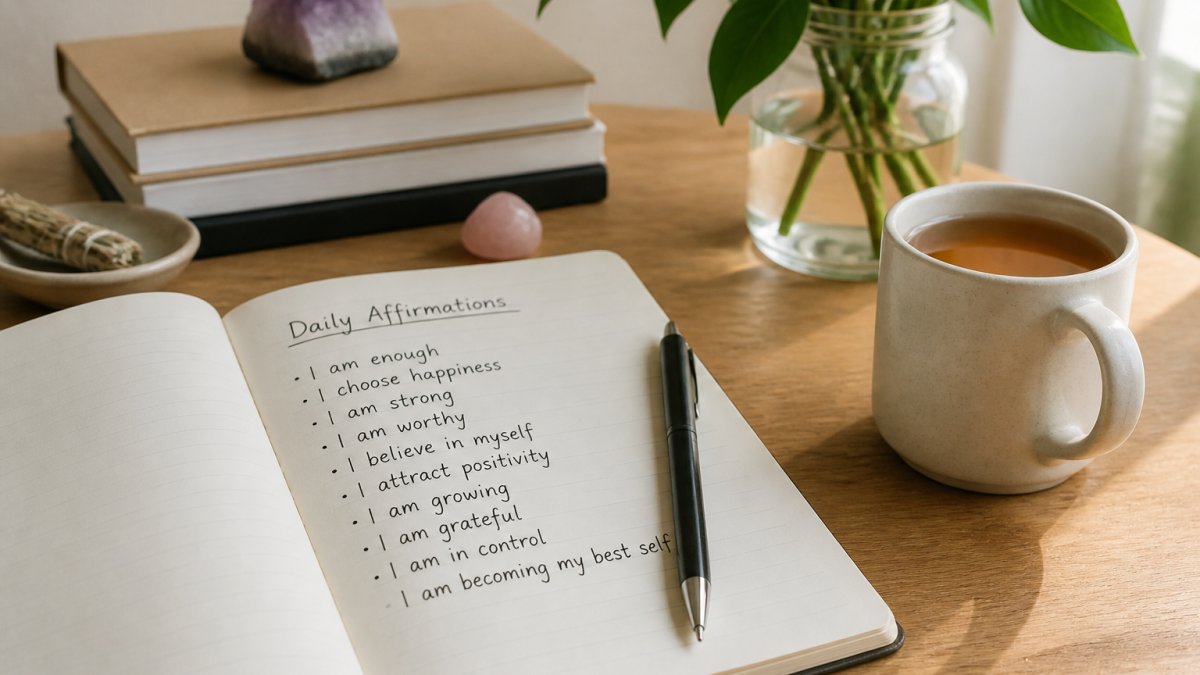
 listicle
Daily Affirmations Example: 50+ Statements for Growth
Table of Contents
- What Daily Affirmations Examples Actually Do
- Morning Affirmations to Start Your Day Right
- Daily Affirmations for Confidence That Feel Real
- How to Write Affirmations That Stick
- Building a Daily Affirmation Routine That Works
- What Happens When Affirmations Don't Feel Real
- Affirmations for Specific Life Situations
- Frequently Asked Questions
Last Updated: October 14, 2026
What Daily Affirmations Examples Actually Do
Daily affirmations are positive statements you repeat to challenge negative thoughts, build confidence, and reshape your mindset. A daily affirmations example like "I am capable of handling challenges with grace" directly counters self-doubt.
The real power lies in consistency: repeating affirmations daily rewires how your brain responds to stress, setbacks, and self-criticism.
At Soul Perfect, people who start with simple daily affirmations examples often report feeling more resilient within weeks.
Affirmations work best when they feel believable.
Morning Affirmations to Start Your Day Right
What separates a lasting practice from one that fades is how you run it, the timing, the sequence, and how you handle pushback. Here is a morning set organized around readiness and capability, followed by the routine that makes them stick.
- "I choose to approach today with patience and kindness toward myself"
- "I am prepared to handle whatever comes my way"
- "My challenges today are opportunities to grow stronger"
A Practical Morning Routine for Using Them
People who keep the habit going use a short, repeatable sequence. Try this five-minute structure:
- Before you touch your phone (1 minute). Sit up, take three slow breaths, and read your affirmations silently. You set the day's first input before email or social feeds get there.
- Out loud, slowly (2 minutes). Say each statement aloud, pausing between them. Speaking engages your own voice as the source, which lands differently than reading.
- Write one down (1 minute). Pick the affirmation that feels most relevant to what is actually on your calendar today and write it once in a notebook or notes app.
- Pair it with one action (1 minute). Choose a small action that matches the statement, sending the email you've been avoiding, setting a boundary on a meeting, or drinking water before coffee.
Anchoring the ritual to something you already do every morning, brushing your teeth, making coffee, keeps it from sliding off the schedule.
When a Morning Affirmation Feels False
If a statement triggers an internal "that's not true," do not force it. That reaction is information, not failure. Two adjustments help:
- Soften the claim. Change "I am confident" to "I am practicing confidence." The statement stays forward-facing without asking your brain to accept something it rejects.
- Add the obstacle. Name the real thing in the way, "Even though I am nervous about the presentation, I can prepare one slide at a time." Acknowledging the difficulty while affirming your capacity to handle it reduces the pushback.
A mug, a card on the bathroom mirror, or a note on your laptop can serve as the cue that starts the routine, the object is just the reminder that it exists.
Daily Affirmations for Confidence That Feel Real
Confidence affirmations often fail because they sound hollow. Saying "I am the most confident person alive" when you are nervous creates cognitive dissonance, your brain rejects it. The fix is to close the gap between the statement and what you can accept today.
Here are confidence affirmations written to sit one step ahead of where most people actually are:
- "I am learning to trust my judgment"
- "My voice matters, and I'm practicing using it"
- "I have overcome challenges before, and I can do it again"
A Simple Method for Personalizing Any Affirmation
Generic lists are a starting point, not a finished practice. To make a statement believable, run it through three quick edits:
- Name the specific situation. "I am confident" is vague. "I am confident walking into a meeting where I have prepared" points at something real.
- Add a bridge word. Words like learning, practicing, becoming, and building signal progress without demanding you've already arrived. "I am confident" becomes "I am building confidence in how I speak up at work."
- Check it against your own reaction. Read it aloud. A small lift means it's calibrated. A cringe means soften it. Flat and meaningless means add specificity.
A useful test: "Could I say this to a friend in the same situation without feeling like I was lying?" If yes, it's believable enough to work with.
What to Do When an Affirmation Backfires
A common, under-discussed experience is repeating a positive statement and feeling worse, more self-critical or more aware of the gap between the statement and reality. This means the statement is aimed too far ahead.
When this happens:
- Stop repeating the statement. Repeating something your mind is actively rejecting strengthens the rejection.
- Write down the objection. If your mind says "that's not true because I froze in last week's meeting," write it down. The objection is usually more specific and useful than the affirmation was.
- Rewrite from the objection. Turn it into the new statement: "I froze in one meeting, and I can prepare differently for the next one."
Realistic Expectations for a Confidence Practice
What most people notice over the first few weeks is subtle: they catch a negative thought a beat earlier, recover from a setback slightly faster, or speak to themselves as they would to a friend, not a sudden, permanent personality change.
A weekly two-minute review helps you check whether the practice is working. Ask three questions:
- Did I actually do the practice this week, or did it slide?
- Did I talk to myself differently than I would have a month ago?
- Is there one statement I should retire, and one I should add?
If the practice isn't helping after several weeks of consistent effort, that's useful information, not a personal failure. The statements may need to be more specific, the routine may need a different anchor, or the underlying issue may need outside support.
How to Write Affirmations That Stick
Writing your own daily affirmations examples ensures they resonate with your actual life, not someone else's aspirations.
Make Them Personal and Believable
Identify a specific area where you struggle, perfectionism, people-pleasing, feeling unworthy, and write an affirmation that acknowledges the struggle while pointing toward change.
Weak: "I am perfect." Strong: "I am learning to accept myself, flaws and all."
Weak: "Everyone loves me." Strong: "I am worthy of genuine connection and respect."
The strong versions work because they're grounded in reality: your brain accepts them as possible, so they influence your thinking.
Use Present Tense and Positive Language
Affirmations work best in the present tense because your subconscious responds to what feels current, not future.
Believe in Yourself Black Glossy Mug →
Weak: "I will become confident someday." Strong: "I am building confidence every day."
Weak: "I won't be anxious anymore." Strong: "I am calm and capable."
The second version removes the negative word. Your brain processes "I am not anxious" by first thinking about anxiety, which defeats the purpose (Ironic Effects of Thought Suppression: A Meta-Analysis).
Building a Daily Affirmation Routine That Works
A daily affirmations example becomes powerful only when it's part of a consistent routine.

Start small. Choose 3-5 affirmations that genuinely resonate with you.
Here's a practical approach:
- Week 1-2: Say your affirmations aloud while looking in the mirror. This feels uncomfortable for most people. That's normal. The discomfort means you're challenging old patterns.
- Week 3-4: Write them in a journal. Writing engages different neural pathways than speaking, which deepens the effect.
- Week 5+: Combine methods. Say them aloud some days, write them others, think them while meditating. Variation keeps the practice fresh.
Many people find that pairing affirmations with a physical object helps. The Believe in Yourself Black Glossy Mug becomes a daily reminder.
What Happens When Affirmations Don't Feel Real
Affirmations fail for one reason: they don't match your current reality closely enough. When the gap between what you're saying and what you believe is too large, your mind dismisses the statement as fantasy.
The fix is building a bridge. Use affirmations that acknowledge where you are while pointing toward growth:
- Instead of: "I am confident" → Try: "I am becoming more confident"
- Instead of: "I deserve success" → Try: "I am learning to recognize my own worth"
- Instead of: "Everything will be fine" → Try: "I have the resilience to handle whatever comes"
Affirmations aren't magic, they're a tool for gradually shifting how you talk to yourself. If they still feel hollow after several weeks, you may need to address underlying beliefs through therapy, coaching, or deeper personal work.
Affirmations for Specific Life Situations
Different challenges require different daily affirmations examples. Here are targeted statements for common situations:
For career transitions or new challenges:
- "I am capable of learning what I need to know"
- "My past experience has prepared me for this"
- "I bring value to this role"
For relationships and connection:
- "I am worthy of being heard and understood"
- "I can be honest about my needs"
- "I choose people who respect me"
For recovery from loss or setback:
- "I am stronger than I think"
- "This difficulty is temporary; I will move through it"
- "My worth is not determined by this one failure"
For daily stress and overwhelm:
- "I focus on what I can control right now"
- "One step at a time is enough"
- "I am doing my best, and that is enough"
For self-compassion and acceptance:
- "I treat myself with the same kindness I offer others"
- "My imperfections make me human, not inadequate"
- "I am allowed to rest and take care of myself"
Match the affirmation to your actual situation: a person grieving needs different statements than someone navigating a career change. Specificity makes the difference between a statement that lands and one that bounces off.
| Situation | Affirmation Focus | Example |
|---|---|---|
| New challenge | Capability and learning | "I am capable of learning what I need" |
| Relationship conflict | Boundaries and worth | "I am worthy of respect and understanding" |
| Loss or failure | Resilience and growth | "I am stronger than I think" |
| Daily stress | Control and presence | "I focus on what I can control" |
| Self-doubt | Self-compassion | "I treat myself with kindness" |
Building a daily affirmations practice requires patience. The statements you repeat today become the thoughts that surface automatically tomorrow.
Soul Perfect's community is built on this principle: personal growth isn't about toxic positivity or pretending problems don't exist, it's about choosing how you talk to yourself when things get hard. Items like the I Am Open to Growth Framed Poster serve as visual reminders in your space.
Frequently Asked Questions
How do I write my own daily affirmations that actually feel believable?
Start with statements that feel like a small step forward rather than a huge leap. Instead of "I am completely fearless," try "I am building my courage one day at a time." Use your own language, not flowery words that don't match how you naturally talk. Include specific situations you're working through ("I handle difficult conversations calmly") rather than vague positivity. Test each affirmation by saying it aloud. If it triggers skepticism or feels like a lie, adjust it until it feels like something you could believe with effort.
How many affirmations should I say daily?
Quality matters far more than quantity. Three to five affirmations you genuinely connect with will be more effective than twenty you rush through. Focus on affirmations that address your specific challenges or goals right now. You can rotate them weekly or monthly as your focus shifts. The goal is consistency and real engagement, not checking off a long list.
Can daily affirmations help with stress and anxiety?
Affirmations can support stress management by shifting your focus toward what you can control and building self-compassion. Statements like "I am handling this one moment at a time" or "I choose calm over worry" can interrupt anxious thought patterns. However, affirmations work best alongside other tools, sleep, movement, talking with someone you trust, or professional support if anxiety is severe. They're a complement to your wellness routine, not a replacement for it.
What should I do if affirmations trigger negative feelings or seem to backfire?
If an affirmation feels false or makes you feel worse, stop using it. This often happens when the gap between your current reality and the statement is too wide. Scale back to something more believable. For example, if "I am successful" triggers shame, try "I am taking steps toward my goals" instead. Some people also find it helpful to pair affirmations with action, saying "I am capable" while actually completing a task makes the statement feel more grounded. If affirmations consistently feel unhelpful, focus on self-compassion statements instead.