 how-to
How to Avoid Burnout During Personal Development
Table of Contents
- Recognize the Signs of Self-Improvement Burnout
- Set Realistic Personal Development Goals That Stick
- How to Maintain Motivation While Busy
- Build Boundaries and Protect Your Downtime
- The Comparison Trap: Why Social Media Derails Growth
- Recovery Strategies and Neurobiological Reset
- Create Sustainable Habits Without the Pressure
Last Updated: August 17, 2026
Recognize the Signs of Self-Improvement Burnout
Self-improvement burnout is physical, emotional, and mental exhaustion from prolonged personal development without adequate recovery. It differs from clinical depression because it stems directly from pressure to constantly self-optimize rather than a broader mood disorder.
Many people start enthusiastically, journaling daily, attending workshops, reading self-help books, but around week six or eight, momentum stalls. Activities that felt energizing become obligations. This "betterment burnout" emerges from internal pressure: the belief that you must constantly optimize yourself to be worthy or successful.
Early warning signs include irritability when missing scheduled activities, guilt about falling off track, difficulty concentrating on development content, physical fatigue despite adequate sleep, resistance to previously enjoyed activities, intensifying perfectionism, and comparing your progress to others' highlight reels.
The comparison trap deserves special attention. Social media shows curated versions of others' progress, you see a "90-day transformation" without the failed attempts, skipped days, or professional photography. Your brain registers this as evidence you're falling behind, intensifying pressure to do more.
Set Realistic Personal Development Goals That Stick
The most common mistake is setting goals requiring superhuman consistency. Many people design improvement plans as if they have unlimited time and energy, then are shocked when real life interferes.
Realistic goals work backward from your actual capacity, not your aspirational capacity. Honestly assess how much time and mental energy you genuinely have available each week, then allocate only a portion to growth activities.
A practical framework for sustainable goal-setting:
-
Identify your baseline capacity. Track realistic hours per week available after work, sleep, and essential responsibilities. Most people overestimate by 30-50%.
-
Allocate 20-30% of available time to personal development. If you have 10 hours of discretionary time weekly, dedicate 2-3 hours maximum to growth activities, leaving buffer room for unexpected demands.
-
Choose ONE primary goal. Research on habit formation consistently shows single-focus goals have dramatically higher completion rates than multiple concurrent goals.
-
Define success as consistency, not perfection. Instead of "read 30 minutes daily," aim for "read at least 4 days per week." This removes all-or-nothing thinking that triggers burnout.
-
Build in planned breaks. Schedule one week off per quarter where you intentionally don't pursue your development goal, preventing unrelenting fatigue.
A modest goal you maintain beats an ambitious goal you abandon.
How to Maintain Motivation While Busy
Motivation during busy periods requires protecting the one thing you've committed to, not adding more activities. Design your environment and routines to make the behavior automatic rather than dependent on willpower.

A practical approach to motivation maintenance:
-
Anchor your goal to an existing habit. Meditate immediately after your morning coffee. The established routine pulls the new behavior along without requiring additional motivation.
-
Lower the activation barrier. Leave your journal and pen on your desk. Lay out workout clothes the night before. Put your meditation app on your home screen. Easier behaviors are more likely when motivation is low.
-
Reframe motivation as irrelevant. Commit to the behavior regardless of motivation. You don't need to feel like journaling to journal. This removes motivation from the equation and replaces it with simple commitment.
-
Track completion, not quality. A five-minute meditation counts as much as twenty minutes. A half-page journal entry counts as much as a full page. This removes perfectionism that drains motivation.
-
Connect the behavior to a deeper value. When motivation dips, reconnect to why you're doing this. "I meditate because it helps me show up better for people I care about" sustains motivation longer than "I should meditate because it's good for me."
Build Boundaries and Protect Your Downtime
Boundaries are structural requirements for sustainable personal development. Without them, self-improvement activities expand to fill all available time and mental space, leaving no room for recovery.
Effective boundaries include:
-
Time boundaries: Designate specific hours for personal development and hours where it's off-limits. This prevents self-improvement from colonizing your entire day.
-
Device boundaries: Set specific times when devices are off-limits to prevent constant consumption of growth content. Unplugging from self-improvement content is itself a form of self-improvement.
-
Social boundaries: Establish clear expectations about communication frequency in personal development communities. Not every message requires immediate response.
-
Content boundaries: Unfollow accounts that trigger comparison. Unsubscribe from newsletters that make you feel behind. Mute keywords that activate shame. Your environment shapes your psychology.
Your brain requires genuine downtime to consolidate learning and recover from cognitive effort. When constantly consuming development content, your brain never reaches the relaxation state necessary for integrating what you've learned.
The Comparison Trap: Why Social Media Derails Growth
Social media makes everyone's growth journey visible and comparable, creating the "comparison trap", measuring your progress against others' highlight reels rather than your own baseline.
You see someone's transformation photo or promotion announcement. Your brain calculates the gap between where they are and where you are, triggering a stress response interpreted as motivation. But it actually produces anxiety, which drives unsustainable behavior: increasing activities beyond what you can maintain, setting more aggressive goals, consuming more content, comparing more frequently. This cycle accelerates toward burnout.
The antidote requires active curation:
-
Audit your feeds. Notice which accounts, posts, or content trigger comparison and anxiety.
-
Unfollow or mute ruthlessly. Your mental health takes priority over not offending someone's algorithm.
-
Follow people at your level. Progress looks different at different stages. Seeing someone at your stage motivates better than seeing someone far ahead.
-
Limit consumption windows. Designate specific times for social media rather than scrolling throughout the day.
-
Seek communities over comparison. Supportive communities celebrate others' progress without requiring you to measure yourself against them.
Soul Perfect's community model emphasizes shared experience over competition. Members connect through personal stories rather than curated highlight reels, shifting psychology from "How do I compare?" to "How can we support each other?"
Recovery Strategies and Neurobiological Reset
Your brain requires specific conditions to recover from sustained personal development work. These aren't luxuries, they're biological necessities.
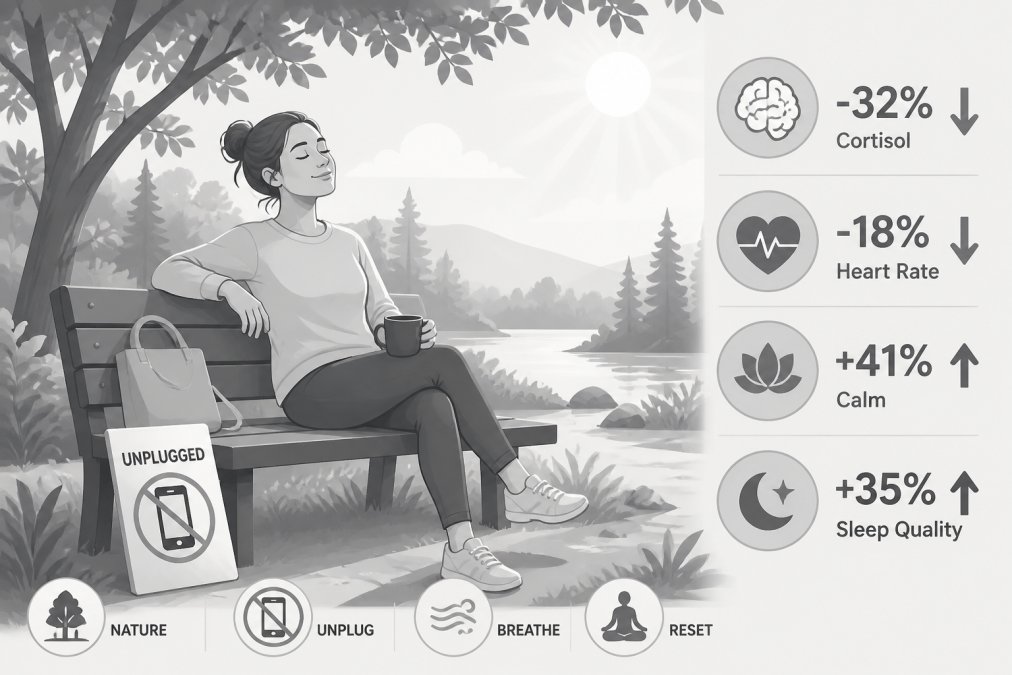
Recovery strategies that work:
-
Extended digital detox periods. Your nervous system requires periods of low stimulation to downregulate from constant digital input. One full day per week without devices produces measurable shifts in stress hormones.
-
Nature exposure. Time in natural environments reduces cortisol and activates your parasympathetic nervous system. Even 20 minutes in a park produces detectable physiological change.
-
Sleep prioritization. Your brain consolidates learning, processes emotions, and clears metabolic waste during sleep. Sacrificing sleep for personal development is counterproductive.
-
Restorative practices. Activities that genuinely restore energy without performance goals: cooking, gardening, time with loved ones, creative play.
-
Mindfulness practices. Mindfulness focused purely on present-moment awareness without judgment reduces the pressure of self-improvement.
Recovery must be built into the cycle itself. A sustainable practice looks like: effort → recovery → effort → recovery, not: effort → effort → effort → collapse.
Create Sustainable Habits Without the Pressure
Sustainable habits differ fundamentally from ambitious habits. Unsustainable habits rely on willpower and perfect consistency. Sustainable habits rely on environmental design, automatic triggers, and acceptance of imperfect consistency.
To create sustainable habits:
-
Start absurdly small. Not "exercise 30 minutes daily," but "do 5 minutes of movement three times per week." Establish the behavior pattern first, then gradually increase.
-
Remove decision-making. Eliminate choices by making the behavior automatic. Same time, location, and trigger removes daily negotiation.
-
Track the behavior, not the outcome. Outcomes are often outside your control. Behaviors are entirely within your control. This builds genuine confidence.
-
Expect setbacks as part of the process. When you miss a day, the plan is "resume the next scheduled opportunity without guilt," not "restart with perfect consistency."
-
Build in flexibility. If you only have 3 minutes instead of 10, 3 minutes counts. Flexibility prevents perfectionism that leads to burnout.
Research shows consistency matters more than intensity. A small habit maintained for a year produces more change than an intense habit maintained for two months. This contradicts personal development culture emphasizing big changes, but it's what actually works long-term.
Sustainable habit formation is supported through community accountability emphasizing progress over perfection. Members share real experiences, including messy parts where they miss days or scale back.
Avoiding burnout during personal development requires rethinking how you approach growth. Instead of asking "How much can I improve?" ask "What pace of improvement can I sustain indefinitely?" That shift changes everything. It moves personal development from a sprint toward an outcome to a sustainable practice embedded in your life. Soul Perfect's community-based approach supports this by providing encouragement and shared experience without comparison pressure. When surrounded by people committed to realistic, sustainable growth, the pressure to constantly optimize decreases, and paradoxically, your actual progress often improves.
Frequently Asked Questions
What are the signs of burnout from self-improvement?
Common signs include persistent exhaustion despite adequate sleep, loss of enthusiasm for goals you once valued, difficulty concentrating, increased irritability, and a sense of dread when thinking about your personal development plan. You might also notice physical symptoms like tension headaches or changes in appetite. The key difference between burnout and clinical depression is that burnout is specifically tied to the effort of self-improvement, whereas depression affects all areas of life. If symptoms persist for weeks or worsen, consult a mental health professional.
How do you balance self-growth with a busy schedule?
Start by treating personal development as non-negotiable self-care rather than another task to optimize. Schedule small, focused sessions (15-30 minutes) instead of lengthy ones. Batch related activities together, and anchor new habits to existing routines using habit stacking. For example, practice mindfulness while having morning coffee or reflect on your goals during your commute. The goal is progress, not perfection, consistency beats intensity when you're managing a full schedule.
Can personal development actually cause burnout?
Yes. When self-improvement becomes about constant optimization and meeting unrealistic timelines, it creates chronic stress and cognitive load. This 'betterment burnout' happens when you chase too many goals simultaneously, compare your progress to others, or pursue growth for external validation rather than internal fulfillment. The pressure to always be improving, what we call the productivity cycle, can exhaust your mental and emotional resources. Sustainable growth requires periods of rest and acceptance of where you are now.
How do I reset after feeling burnt out from goal setting?
Give yourself permission to pause completely for 1-2 weeks without guilt. During this time, avoid setting new goals or tracking progress. Engage in restorative practices like spending time in nature, journaling without performance pressure, or simply resting. This allows neurobiological recovery, your brain needs time to restore depleted resources. When you return to goal-setting, start with just one meaningful goal instead of multiple objectives. Focus on sustainable progress over rapid achievement.
This article was written using GrandRanker