 how-to
Is It Safe to Share Stories Online? A Writer's Guide
Table of Contents
- Is It Safe to Share Stories Online? The Real Risks and Protections
- Copyright Basics for Writers: What You Actually Own
- How to Protect Intellectual Property Online
- Best Platforms for Sharing Short Stories Safely
- Public vs. Private Sharing: Which Is Right for You
- AI Scraping and LLM Training: What Writers Need to Know
- Managing Your Digital Footprint as a Writer
- What to Do If Your Story Is Stolen
Last Updated: August 8, 2026
Is It Safe to Share Stories Online? The Real Risks and Protections
Sharing your creative work online carries real risks, but the answer isn't a simple yes or no. Writers today face genuine threats from AI scraping, content theft, and unauthorized intellectual property use. Most writers who take basic precautions find the benefits of sharing far outweigh the risks.
This guide from Soul Perfect explores what threatens your work, which platforms offer genuine protection, and how to share strategically while building an audience. We'll cover the legal frameworks that protect you, the technical measures that work, and where your work is safest.
The key insight: you don't have to choose between visibility and security. You need the right platform, understanding of your rights, and deliberate decisions about what you share publicly versus what you keep private.
Copyright Basics for Writers: What You Actually Own
Your story is protected by copyright the moment you write it, no registration required. When you create an original work and fix it in a tangible medium, you automatically own the copyright. Copyright law gives you exclusive rights to reproduce, distribute, display, and create derivative works based on your creation.
The challenge is enforcement. Knowing you own the copyright and proving it are different things. Timestamp your work by saving it with metadata intact, keeping dated drafts, and ideally registering with the U.S. Copyright Office for the strongest legal position. Registration isn't required for protection, but it provides additional remedies if you pursue legal action.
Fair use is often misunderstood. It allows limited copying for criticism, commentary, or education, but not republishing your entire story for profit. Understanding this distinction matters when evaluating whether your work has actually been stolen.
How to Protect Intellectual Property Online
Protecting your intellectual property requires a layered approach. No single method eliminates all risk, but combining several strategies significantly reduces exposure.
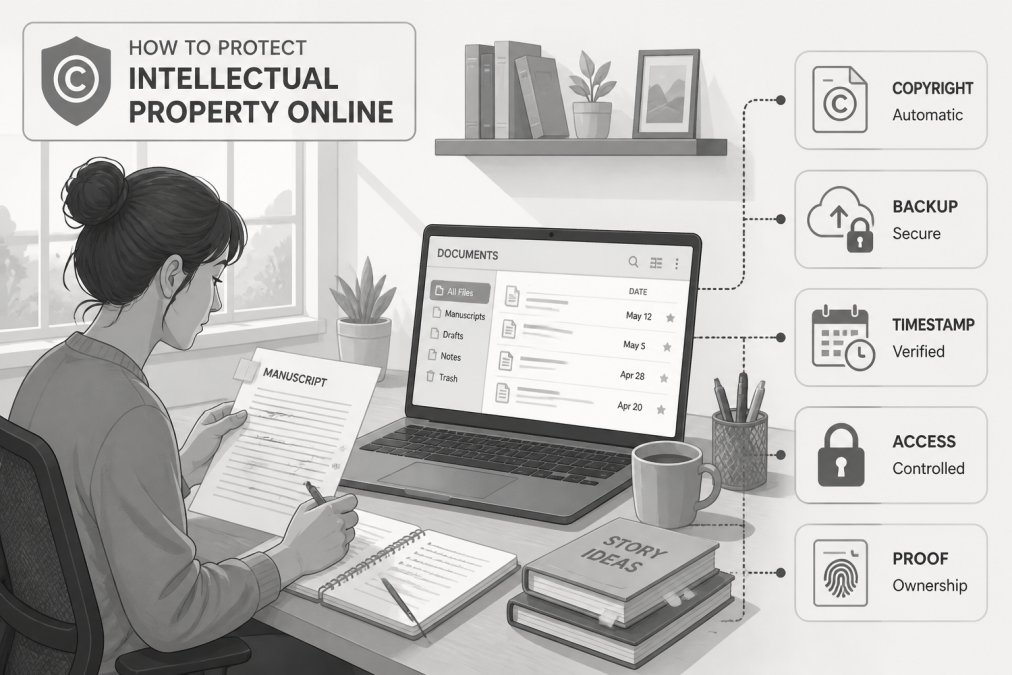
Start with documentation. Keep timestamped drafts showing the creation process. Most word processors automatically track creation and modification dates. Save files in formats that preserve metadata. Dated drafts are your strongest evidence of ownership if needed.
Next, choose sharing platforms carefully. Some have terms of service that grant you more control; others make content easier to scrape. Understand what rights you're granting before publishing.
Consider what you share publicly versus privately. Your complete, polished story might stay private until publication. Share excerpts, outlines, or work-in-progress material publicly to build an audience while keeping finished work under tighter control.
Technical Protection Methods
Digital rights management (DRM) tools prevent easy copying. Watermarking embeds identifying information into your document, helping prove ownership if your work appears elsewhere. Password protection restricts access to specific readers. Content delivery networks and secure hosting platforms make it harder for automated scrapers to access your work.
Metadata and Digital Watermarking
Metadata includes your name, creation date, copyright notice, and identifying details. Preserving it when saving and sharing files helps establish ownership. Check whether platforms preserve metadata upon upload, some strip it to reduce file size.
Digital watermarking embeds your name or identifier directly into the document. Visible watermarks appear on the page; invisible ones are embedded in the file. These methods aren't foolproof but create friction against casual copying and provide ownership evidence.
Best Platforms for Sharing Short Stories Safely
The platform you choose determines how much control you have and how exposed your work is to scraping or theft.
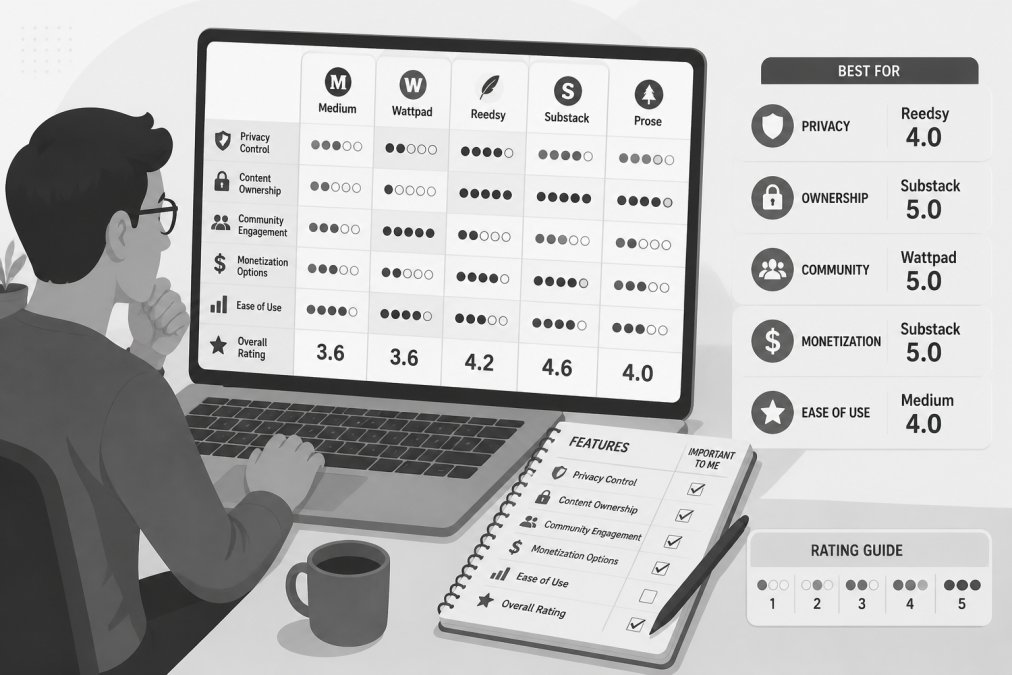
Established publishing platforms like Medium, Substack, and literary magazines offer moderate protection. They have terms protecting intellectual property, monitor for content theft, and provide takedown mechanisms.
Community platforms like Wattpad and Royal Road are built for writers sharing stories. They have active communities, built-in anti-scraping protections, and plagiarism reporting tools.
Personal websites give you the most control. You set your own terms and decide what's public. The tradeoff is you don't benefit from the platform's built-in security or audience.
Soul Perfect provides a space for members to share personal stories within a supportive community focused on intentional living and personal growth.
Platform-Specific Terms of Service
Before sharing, read the terms of service. Look for how the platform handles your intellectual property rights. Some claim ownership or broad licensing rights; others explicitly state you retain full ownership.
Check whether the platform monitors for plagiarism and has a process for reporting stolen content. Look at privacy and data policies: How is your work stored? Can you export it if you leave?
Public vs. Private Sharing: Which Is Right for You
Public sharing builds an audience and generates feedback. Private sharing protects your work but limits your audience. The middle ground is selective sharing: share excerpts publicly, keep your complete story private until publication, and share work-in-progress with trusted beta readers.
Consider your stage in the writing process. Early drafts benefit from private feedback. Finished stories warrant more caution. Already-published work can be shared more freely.
AI Scraping and LLM Training: What Writers Need to Know
AI systems are trained on text from across the internet, including published stories. The legal landscape is still developing, courts haven't definitively settled whether this constitutes fair use or infringement.
Opt out where possible. Some platforms let you indicate whether your work can be used for AI training. Consider where your work appears. Stories on major platforms like Medium are more likely monitored for scraping than those on small sites.
If concerned about AI training, keeping your complete work private until publication is reasonable. Once published through traditional or established self-publishing platforms, it's likely already in AI training data. Unpublished work you control can stay offline until official publication.
Stay informed about platform policies and legal developments, this landscape is changing rapidly.
Managing Your Digital Footprint as a Writer
Your digital footprint is everything about you online: your author platform, social media, published work, and biographical information.
Search your name to see what appears. Note unauthorized copies or old versions. Build your own author platform, a personal website or blog gives you a central location under your control. Be strategic about biographical information; you don't need to share your full address or phone number.
Use consistent author branding across platforms with the same name, bio, and photo. This helps readers find you and prevents impersonation.
Consider the permanence of what you share. Anything posted online could be saved or archived. Be intentional about what you share and where.
What to Do If Your Story Is Stolen
If you discover your work published without permission, document everything. Screenshot the unauthorized copy, note the URL and date, and save documentation.
Contact the platform where your work appears. Most have a process for reporting copyright infringement. Provide proof you created the work and request removal.
If the platform doesn't respond, send a formal DMCA takedown notice. The Digital Millennium Copyright Act provides a legal mechanism for removing infringing content. You can file without a lawyer, though consulting an attorney strengthens your position.
Consider whether legal action makes sense. Minor infringement on small sites may not justify the cost. Stolen work republished as someone else's on major platforms warrants more aggressive pursuit.
Document your response. Keep records of every communication and takedown notice. For most writers, a direct request to remove content works, many republish out of ignorance rather than malice.
Sharing your stories online doesn't require choosing between visibility and safety. Soul Perfect provides a community specifically designed for members to share personal stories in a supportive environment focused on intentional living and meaningful connection. Start building your author platform with confidence by understanding your rights, choosing the right platforms, and taking basic protective measures. Your stories deserve to be shared, safely.
Frequently Asked Questions
Is it safe to share stories online if I'm worried about theft?
Sharing stories online carries real but manageable risks. Story theft does happen, but most platforms offer basic protections through their terms of service. The key is choosing reputable platforms, adding metadata to your work, and understanding what rights you're granting. Most casual theft involves plagiarism rather than professional republication. By taking deliberate steps, like watermarking, limiting distribution, or using private communities, you can share stories online safely while significantly reducing the risk of intellectual property theft.
How do I copyright my story before sharing it online?
Copyright exists automatically the moment you create original work, you don't need to register it. However, registering with the U.S. Copyright Office provides legal advantages if you need to pursue infringement claims. Registration costs $65 and takes weeks to process. Before sharing, add metadata to your file (author name, creation date, copyright notice) and consider a Creative Commons license if you want to allow specific uses. Document your creation process with drafts or timestamps to prove originality.
Should I be worried about AI scraping my stories?
AI scraping is a legitimate concern. Large language models train on publicly available text, including stories posted online. If your story is public and searchable, it could be included in training data. To minimize this risk, use platform privacy settings, opt out of search indexing where possible, include a robots.txt directive on personal websites, and check platform terms of service for AI training clauses. Some platforms now offer opt-out options. If you're concerned about your work being used for AI training, consider sharing only with trusted communities or keeping work private until publication.
What's the difference between publishing a story online and sharing it in a community?
Publishing typically means making work widely available through official channels (platforms, literary agencies, or print). Sharing in a community, like a beta reader group or private forum, usually has limited distribution and different legal implications. However, posting publicly on any platform can count as publication under copyright law, which may affect your ability to submit to traditional publishers. Always check submission guidelines before sharing stories online, as many publications require first publication rights. Private communities offer more control but less visibility.
This article was written using GrandRanker