 listicle
Affordable Alternatives to Expensive Meditation Apps
Table of Contents
- Why Expensive Meditation Apps Don't Work for Everyone
- Free Meditation Apps and Their Real Limits
- Guided Meditation Without an App: Low-Tech Options
- Breathing Exercises for Concentration You Can Start Today
- Building a Daily Focus Routine Without Subscriptions
- Mindfulness Exercises for Focus That Cost Nothing
- Creating Your Focus Space: Physical Tools That Support Daily Practice
- Conclusion
- Frequently Asked Questions
Last Updated: October 17, 2026
Why Expensive Meditation Apps Don't Work for Everyone
Meditation apps promise better focus, less stress, and better sleep, often for $100 to $200 per year. But high cost doesn't guarantee results.
At Soul Perfect, we believe a sustainable focus routine doesn't require expensive subscriptions. The most effective practice is the one you'll stick with, for many people, affordable meditation apps alternatives for daily focus work just as well as premium platforms.
Free apps, low-tech methods, and community-based approaches deliver the same focus, calm, and consistency without the recurring cost. Here's how to build a daily focus routine that doesn't drain your wallet or your willpower.
Free Meditation Apps and Their Real Limits
"Free" means something different on every platform, and the gap between a free tier and a paid subscription is where most daily-focus routines fall apart. Before subscribing, know what the free version gives you, what it withholds, and what the paid version costs over a year. Here's how the free tiers of the most commonly recommended apps break down:
- Insight Timer, The largest free guided library of any major app, with tens of thousands of community-contributed sessions and a working meditation timer. The free tier is genuinely usable for daily focus work. The paid tier (roughly $60 per year) adds structured courses, offline downloads, and ad-free playback.
- Healthy Minds Program, Free, with no paywall on the core content. It is built around a structured four-pillar curriculum (awareness, connection, insight, purpose) and is one of the few apps where the free version is the product, not a teaser.
- Smiling Mind, Free, nonprofit-backed, and organized into age-banded and use-case programs. Good for beginners; lighter on advanced focus content.
- Headspace and Calm, Limited free tiers (a rotating handful of sessions plus a timer). Full access runs roughly $70 to $80 per year, or about $13 to $15 per month if billed monthly. The free tier is a trial in everything but name.
- Ten Percent Happier, A small free sampler; full access is roughly $100 per year.
- Balance, Free for the first year in many cases, then a paid renewal. Read the renewal terms before you start, because the free year is the trial.
A few patterns hold across nearly all of them:
- The free library is finite and repetitive. You will cycle through the same 5 to 15 sessions within a few weeks, and they stop holding your attention right as the habit should be forming.
- Offline downloads are almost always paid. If you meditate on a commute or with weak signal, this is the limit you hit first.
- Timers are usually free; structured courses are not. A bare timer plus silence is a legitimate daily-focus practice that costs nothing on most apps.
- Trials auto-renew. Most paid tiers offer a 7- or 14-day trial that converts to a full annual charge unless you cancel. Set a reminder for the day before it ends.
The cost-over-time math. A $70-per-year subscription is about $210 over three years and $350 over five. Two subscriptions double that. That's reasonable only if you use the app daily, so compare it against the alternatives here, most of which cost $0 after setup.
What to check before you rely on a free tier:
- How many distinct sessions are free, and do they rotate?
- Can you download sessions for offline use?
- Does the trial auto-renew, and what is the cancellation window?
- Is there a timer that works without an account?
- Do ads interrupt a session mid-practice?
Free tiers change frequently. Verify current limits and trial terms on the app's own pricing page before you enter payment details, and cancel trials you do not intend to keep before the renewal date.
Guided Meditation Without an App: Low-Tech Options
Most app roundups stop at other apps. But if the goal is escaping an expensive subscription, the strongest alternatives often aren't apps at all.
Browser-based and public audio libraries
- UCLA Mindful Awareness Research Center publishes a free library of guided meditations (breathing, body scan, focused attention) as streaming audio and downloadable MP3s. No account, no app, no cost; the trade-off is a fixed catalog rather than a rotating feed.
- Palouse Mindfulness offers a complete, free, structured MBSR course with guided audio and a week-by-week schedule, one of the few free resources with a real curriculum.
- Insight Timer's website works in a browser without installing the app, useful if you want a large free library without another icon on your phone.
- Public-domain and Creative Commons audio archives host downloadable meditation recordings. Quality varies widely, so preview before relying on a track.
Podcasts
Many teachers publish free guided sessions as podcasts, and podcast apps allow free offline downloads, the closest free equivalent to an app's offline library.
YouTube
YouTube hosts an enormous free catalog, from 5-minute breathing sessions to 30-minute body scans.
Library digital collections
Most public libraries lend audiobooks and, in many systems, guided meditation titles through apps like Libby or Hoopla.
Timers and silence
A plain timer plus silence is the lowest-cost daily-focus method that exists. Most phones include a clock timer; interval timers add bells if you want structure.
Simple self-guided routines
You do not need audio to run a structured session. A workable 10-minute daily focus routine:
- Two minutes of slow breathing (see the next section for specific patterns).
- Five minutes of single-point attention: choose one anchor (breath, a sound, a spot on the wall) and return to it each time attention wanders.
- Two minutes of open awareness: let attention rest broadly without chasing thoughts.
- One minute of noting: silently label the session's main distraction ("planning," "replaying," "worrying") so you learn your own patterns.
How the options compare for daily focus
| Option | Cost | Offline | Structure | Best for |
|---|---|---|---|---|
| Public audio libraries (UCLA, Palouse) | $0 | Downloadable | Curriculum or fixed catalog | Beginners who want instruction |
| Podcasts | $0 | Yes, via podcast app | Creator's schedule | Commuters and offline use |
| YouTube | $0 (ads unless ad-free tier) | Limited | Variable | Variety and short sessions |
| Library digital collections | $0 with card | Yes | Curated | Structured audiobook courses |
| Timer + silence | $0 | Yes | None | Building raw attention |
| Self-guided routine | $0 | Yes | You design it | Daily consistency |
The honest trade-offs
- No progress tracking. Apps log streaks and minutes; low-tech options don't. Use a paper calendar if streak tracking keeps you consistent.
- No personalization. You'll need to choose sessions deliberately rather than accept a recommendation.
- Quality control is on you. Favor established institutions and teachers with a track record.
- Setup friction is higher. Build a short playlist or download a folder once so daily practice is one tap, not a search.
Free YouTube and podcast content varies widely in quality. A 20-minute "meditation" by an unqualified creator can leave you more frustrated than focused. Stick with established institutions, credentialed teachers, and channels with consistent, verifiable feedback.
The cheapest path to a daily focus habit is usually not a cheaper app, it is a downloaded folder of guided audio plus a timer. Set it up once, and the daily decision collapses to a single tap.
Breathing Exercises for Concentration You Can Start Today
Breathing exercises are the foundation of any focus routine, requiring no app, subscription, or setup. You can start now.
The 4-7-8 technique: breathe in for 4 counts, hold for 7, exhale for 8. Do it for 2-3 minutes before focused work.
Box breathing works similarly: inhale for 4, hold for 4, exhale for 4, hold for 4. Repeat for 5 minutes.
The 5-minute rule: set a timer for 5 minutes and focus only on your breathing.
One Moment at a Time Amber jar soy candle →
Practice anywhere: at your desk, in your car before a meeting, or on a coffee break.
Harvard Health research on breathing techniques for stress confirms that controlled breathing directly impacts focus and anxiety levels.
Building a Daily Focus Routine Without Subscriptions
Consistency beats intensity: a 5-minute daily practice outperforms a 45-minute session once a month. Build a routine that fits your schedule and doesn't feel like a chore.
Start with a trigger. Attach your meditation to something you already do: after your morning coffee, before opening email, during your lunch break.
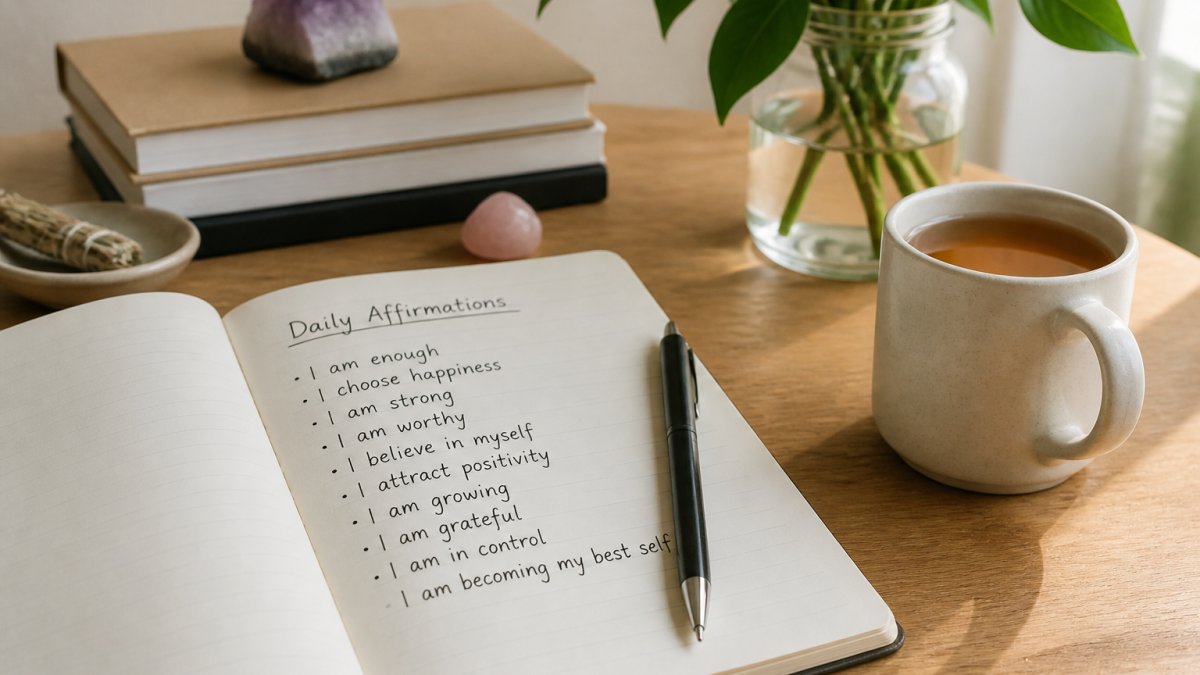
Track your practice. Marking each day on a simple calendar creates momentum, and pen and paper work as well as an app.
Set a realistic target. Five to ten minutes daily is enough to build focus; a consistent 7-minute routine beats sporadic 20-minute sessions.
Combine methods. Use a breathing exercise one day, a free YouTube guided meditation the next, silence and a timer the day after.
The best daily focus routine is the one you'll actually do. Choose the method that requires the least friction: if you hate apps, skip them. If silence feels empty, use guided content. Your consistency matters more than your method.
Mindfulness Exercises for Focus That Cost Nothing
Mindfulness doesn't require meditation.
Body scan meditation: mentally move through each part of your body, noticing sensation without trying to change anything. Start at your toes and move upward.
Mindful walking: take a 10-minute walk and notice everything, the texture of the ground, the temperature of the air, sounds around you.
Single-tasking: choose one task and do only that for 25 minutes. No email, no notifications, no context switching. The focus improvement is immediate.
Eating meditation: eat one meal per day with full attention. No screens, no reading, just taste, texture, and the experience of eating.
These cost nothing and require no technology. They're mindfulness exercises for focus you can start today.
Creating Your Focus Space: Physical Tools That Support Daily Practice
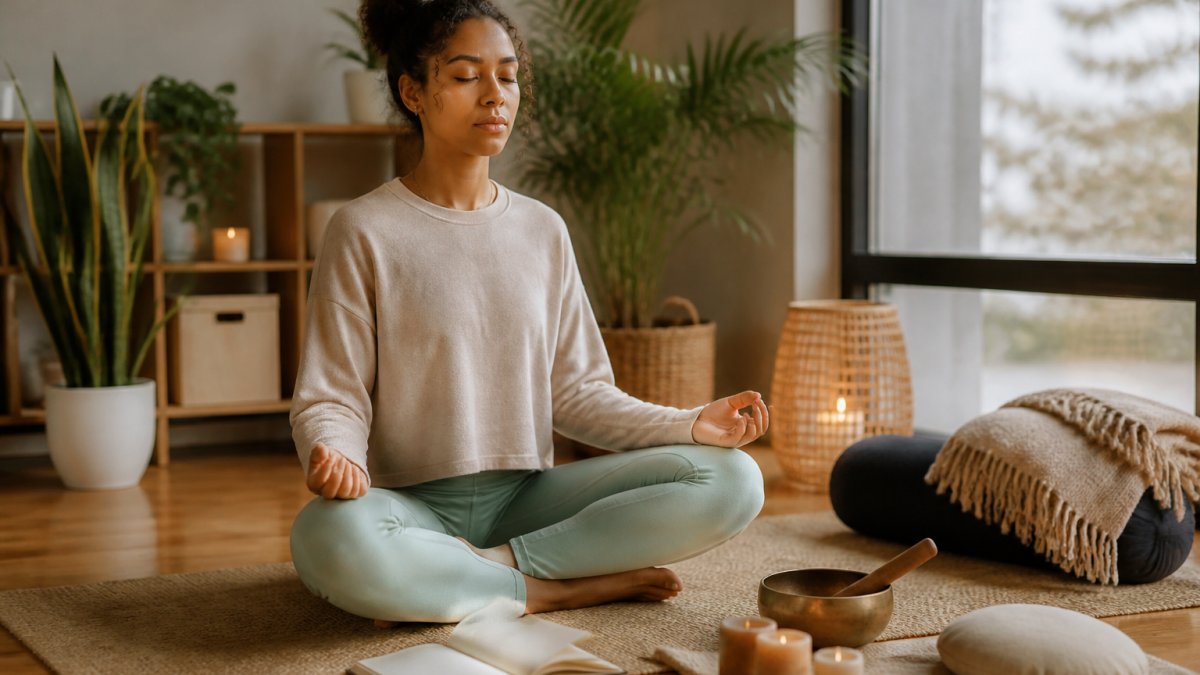
Your environment shapes your ability to focus. A dedicated meditation space doesn't need to be large or expensive, but it should feel intentional.

Lighting matters. Natural light is ideal; otherwise use warm artificial light. Avoid harsh overhead lights, which trigger alertness rather than calm.
Comfort matters.
Sensory cues help. The research on aromatherapy and concentration shows that certain scents (lavender, peppermint) improve focus when paired with meditation practice.
Soul Perfect's soy candles, like the Believe in Yourself Amber jar soy candle ($21.99), create that sensory anchor.
Pairing a physical candle with a visual reminder amplifies your practice. A framed affirmation poster, like Soul Perfect's One Moment at a Time Framed poster ($29.99), placed in your focus space reminds you why consistency matters.
These physical tools cost less than a month of a premium meditation app subscription, and they last indefinitely.
Conclusion
Expensive meditation apps aren't the only path to better focus and daily mindfulness. Free alternatives, low-tech methods, and intentional practice spaces deliver the same benefits at a fraction of the cost. The real work is building consistency.
At Soul Perfect, we believe intentional living starts with small, sustainable practices. Whether you use a free meditation app, YouTube videos, breathing exercises, or silence, what matters is showing up daily. Pair your practice with physical reminders, a candle or framed affirmation, and you create an environment that supports focus without subscriptions or complexity.
Start with five minutes tomorrow. Choose one method. Light a candle or display an affirmation. Then commit to consistency. That's how you build focus that lasts.
Frequently Asked Questions
What are the best free alternatives to paid meditation apps?
Free alternatives include YouTube guided meditation channels, library audiobooks, breathing exercise apps with limited free content, and secular mindfulness resources. Many offer substantial free libraries without requiring subscriptions. Community-based platforms and structured daily practice routines using simple timers also work well for building consistent focus habits without ongoing costs.
Can you improve focus without a meditation app?
Yes. Breathing exercises, body scans, and mindfulness exercises work effectively without apps. You can use a timer, follow written guides, or practice from memory. Many people find that low-tech approaches like journaling, walking meditation, or sitting quietly with intentional breathing can be effective for concentration.
How can I create a daily focus routine without paying for meditation apps?
Start with a simple structure: pick a consistent time, use a free timer, and choose one focus technique (breathing exercise or body scan). Pair it with a physical anchor like a candle or affirmation poster to reinforce the habit. Write down what you practiced and how you felt. Consistency matters more than duration, even 5 minutes daily can help build focus.
Are free meditation apps effective for concentration?
Free tiers of paid apps often provide solid guided meditation content and daily features, though they typically include ads and limit session variety. Effectiveness depends on consistency, not cost. Many users find free options helpful for focus, especially when combined with offline breathing exercises and mindfulness practices that require no app at all.